



Blog

  • Pentagon Implores Civilian Workers to Join ICE “Volunteer Force”

    Pentagon Implores Civilian Workers to Join ICE “Volunteer Force”

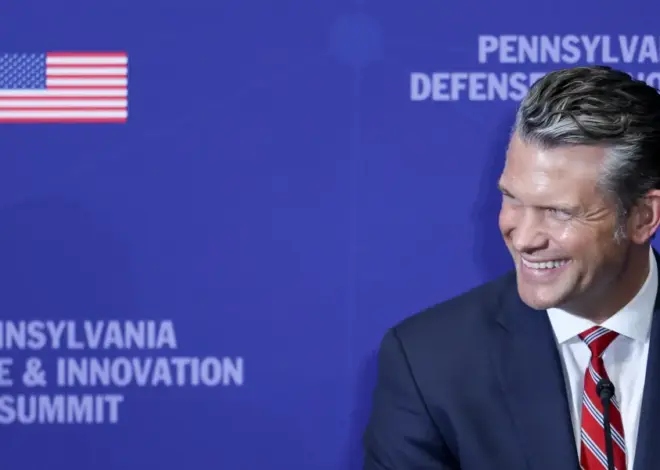
    The Pentagon has put out a call to its civilian employees to volunteer with the Department of Homeland Security as the embattled agency enters its second month without funding and weathers a public relations crisis over its brutal immigration enforcement tactics.

    Read more Government Ordered to Turn Over Files on ICE Agent Who Killed Renee Good

    As email dated Thursday compares immigration enforcement to fighting wildfires and other disaster response and implores civilian employees and contractors to “step up for our country’s next challenge.”

    Those who volunteer “will directly support the operations of U.S. Immigration and Customs Enforcement (ICE) and U.S. Customs and Border Protection (CBP) as they work to ensure a safe and orderly immigration system,” reads the email, listed as from the Office of the Under Secretary of Defense for Personnel and Readiness. “To date, participants have helped ICE and CBP develop concepts of operation, provide logistics support, and managed enforcement activities that enhance public safety.”

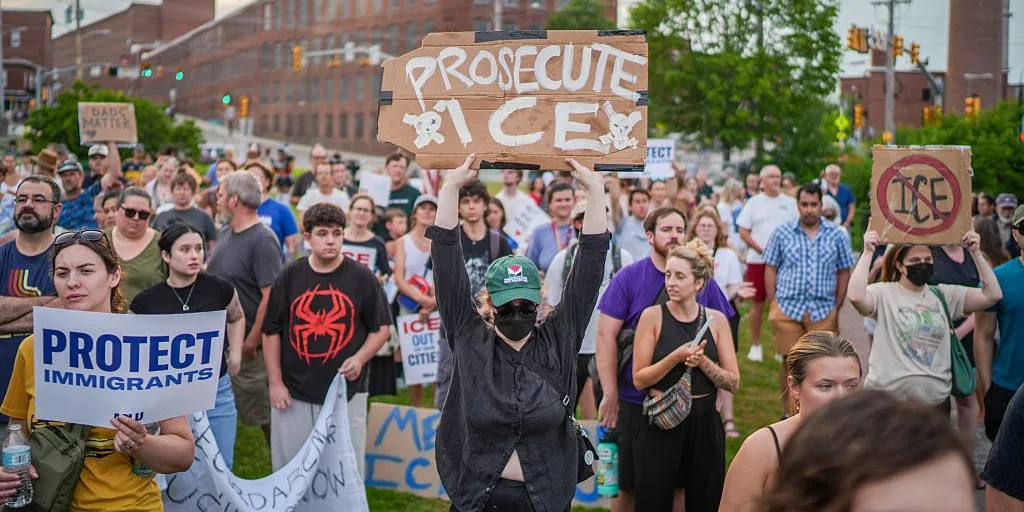
    ICE and CBP have faced a wave of public backlash in recent months, as immigration operations have terrorized communities across the country and killed two civilians in Minneapolis. President Donald Trump fired DHS Secretary Kristi Noem earlier this month, and in February, Congress triggered a partial government shutdown by letting DHS funding lapse while Democrats request reforms.

    A photo of the memo, which was first reported by Military Times, appeared Thursday afternoon on an unofficial Facebook page for Air Force personnel. A spokesperson for the Department of Defense did not respond to The Intercept’s request for comment, but the email’s details match those of an earlier department press release published March 11.

    The Pentagon’s current call for DHS support appears to be a re-up of an earlier ask for volunteers made last August. At that time, Michael A. Cogar, the deputy assistant defense secretary for civilian personnel policy, expressed pride in civilians joining the efforts of DHS.

    “This is a national security problem, and our civilians have the critical skill sets to support DHS in their mission,” Cogar said in August. “We’re proud that our civilians are already willing to sign up.”

    Read more Mamdani Condemns NYC Expo Promoting Property Sales in Israeli West Bank Settlements

    The memo sent out Thursday claimed that more than 900 people had submitted applications so far to take part in the details, but did not specify how many people have been deployed. The March 11 press release claimed that around 200 civilians had deployed as part of the program.

    The email linked to a page on USA Jobs, a clearinghouse for federal job opportunities. The page, titled “Volunteer Force,” advertises a salary range of $25,684 to $191,900 per year. A list of potential volunteer duties include data entry, operational support, assisting ICE and CBP with managing the flow of detainees, and logistical planning.

    The Pentagon has taken an active support role in DHS activities since the beginning of Trump’s second term, when Trump declared a national emergency on the southern border and authorized the armed forces to deploy there.

    Pentagon spending on border security has been the subject of controversy over the past year. In December, Democratic lawmakers accused the Trump administration of siphoning at least $2 billion from the Pentagon’s budget and prioritizing hard-line border initiatives and political stunts over its traditional focus on national security.

    Spokespeople for DHS, ICE, and CBP did not immediately respond to requests for comment.

    Read more Israeli Real Estate Expo Advertising West Bank Settlements Returns to NYC

  • Government Ordered to Turn Over Files on ICE Agent Who Killed Renee Good

    Government Ordered to Turn Over Files on ICE Agent Who Killed Renee Good

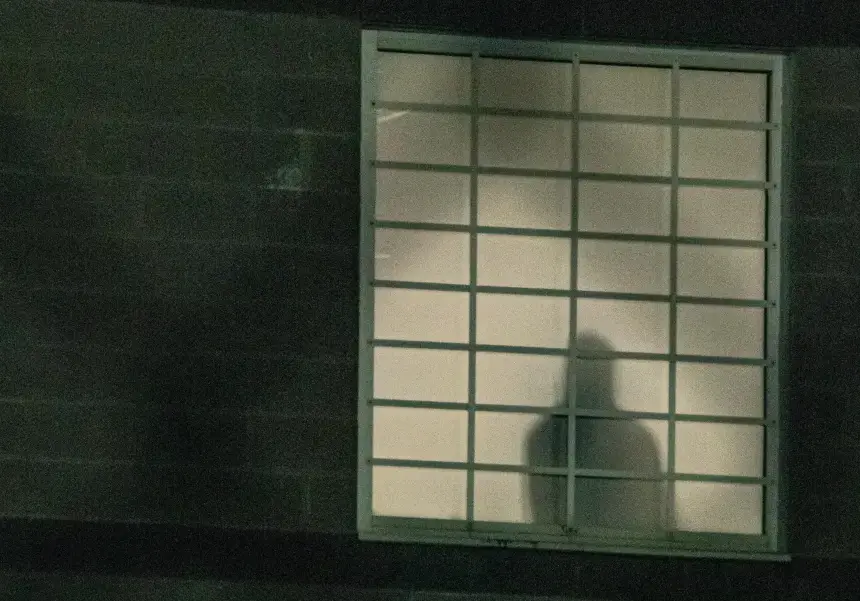
    Federal prosecutors in Minnesota are being forced to turn over critical information on the shooting of Renee Good by Immigration and Customs Enforcement officer Jonathan Ross in relation to a separate case involving Ross.

    Read more Mamdani Condemns NYC Expo Promoting Property Sales in Israeli West Bank Settlements

    Prosecutors have until May 1 to provide a slew of records, including Ross’s personnel file, to a magistrate judge to review and determine which files should be released. The materials could shine light on the killing of Good, an observer who died after Ross shot her during a January 7 confrontation amid a monthslong immigration crackdown in Minneapolis. 

    The order came in response to a motion from the defense attorneys for Roberto Carlos Muñoz-Guatemala, a man who Ross attempted to apprehend in a separate confrontation in June. After Ross broke a window in Muñoz-Guatemala’s car and fired his Taser, Muñoz-Guatemala drove away and was later convicted of dragging Ross with his car.

    Muñoz-Guatemala’s defense attorney Eric Newmark praised the ruling as key to defending the rights of his client, but also important for public understanding of what transpired in the shooting of Good.

    “My client is entitled to a full hearing and to review these documents to determine whether there’s any basis for a new trial,” Newmark told The Intercept. “Ultimately, we’re seeking dismissal of the charges against my client. This information is important because it will help me provide a full and complete defense.”

    Beyond mounting an argument for a new trial or a reduced sentence, Newmark said the information could provide crucial information on Good’s death to Minnesotans hungry for answers.

    “As Minnesotans, we’re frustrated with the apparent lack of a full investigation, the lack of prosecution, and the lack of federal cooperation with local authorities,” Newmark said.

    In addition to Ross’s personnel and training file, the order issued Thursday in Minnesota federal court by Judge Jeffrey M. Bryan commands prosecutors to turn over records of statements Ross made in the 60 minutes before and during his shooting of Good; records of statements by Ross and other federal officials; witness statements regarding the Good killing; medical records pertaining to Ross’s fitness for duty; cell data that might have been extracted from Ross’s phone; body-worn camera footage of the incident; and more.

    Muñoz-Guatemala’s case rose to prominence in January when Ross’s identity as the shooter of Renee Good came to light, in part because both incidents involved Ross confronting a civilian in a car. Ross, a deportation officer based in the ICE field office in St. Paul, was attempting to detain Muñoz-Guatemala during a traffic stop on June 17, when Muñoz-Guatemala attempted to drive away. In the process, he dragged Ross, who had his arm thrust into the window, according to court records.

    On December 12, a jury found Muñoz-Guatemala guilty of one count of assault on a federal officer. After Ross’s killing of Good was revealed, Newmark, Muñoz-Guatemala’s attorney, submitted a request for post-conviction discovery, arguing that the facts of the Good case could be grounds for a new trial or support a lesser sentence for his client.

    Read more Israeli Real Estate Expo Advertising West Bank Settlements Returns to NYC

    “Even if this Court ultimately determines that Defendant is not entitled to a new trial based on newly discovered evidence, he must still be sentenced,” Newmark wrote. “Given the recklessness of Ross’ decision to step in front of Good’s vehicle, the violence he showed by continuing to shoot at a vehicle that was passing harmlessly by, and the extreme callousness he displayed after it should have been clear that he either killed Good or injured her terribly, it would be reasonable to assume he presented similar danger to Defendant in June of 2025. However, without the full investigative file, Defendant cannot make that conclusion.”

    If prosecutors comply with the order, the materials will not immediately be made public. The materials will go first to a magistrate judge who will determine their relevance to the defense team’s case and perform any necessary redactions before handing it over to the defense. At that point, Muñoz-Guatemala’s team would be able to review the material and use it as needed to mount a bid for a new trial or to present as mitigating factors warranting a reduced sentence. Barring a protective order sealing the information, whatever materials submitted as mitigation by the defense could then become a matter of public record.

    “This judge is effectively doing the investigation that the United States has turned its back on,” said Shauna Kieffer, a defense attorney in Minneapolis. 

    But Kieffer, who is not party to the case, expressed reservations about premature celebration of the transparency the order could provide. 

    “I think because this order is so thoughtful and it’s legally sound, that I think there’s a strong chance that the government will dismiss this case if they’re forced to go forward with complying with the order,” she said.

    In a statement to The Intercept, Rep. Becca Balint, D-Vt., joined the calls for transparency.

    “I am glad to see this case finally moving into discovery, but let’s be honest — it should never have taken this long to get here,” said Balint. “Renee Good’s family has been forced to wait for answers while DHS and ICE closed ranks. That’s not how justice works in a healthy democracy. Her family deserves full transparency and accountability, and Americans need to see our government protect them and not just those in power.”

    Spokespersons for the Minnesota U.S. Attorney’s office and the Hennepin County District Attorney’s office did not immediately respond to a request for comment.

    Read more We Analyzed Thousands of News Articles: Here’s the Proof of Pro-Israel Bias in Mainstream Media

  • Mamdani Condemns NYC Expo Promoting Property Sales in Israeli West Bank Settlements

    Mamdani Condemns NYC Expo Promoting Property Sales in Israeli West Bank Settlements

    A roving real estate expo for land sales in Israel and the occupied Palestinian territories held an event at a New York synagogue on Tuesday, drawing a rebuke from Mayor Zohran Mamdani over the potential for land sales that violate international law.

    Read more Israeli Real Estate Expo Advertising West Bank Settlements Returns to NYC

    The Great Israeli Real Estate Event — a showcase that advertises its services in helping people in the United States, Canada, and the U.K. purchase land in Israel and the West Bank — hosted the event at Park East Synagogue in Manhattan’s Upper East Side on Tuesday. The expo helps potential buyers navigate taxes, education concerns, and other issues that arise during relocation to Israel.

    Ahead of the event, Mamdani spoke out against the possibility of potentially illegal land sales being facilitated within the city.

    “Mayor Mamdani is deeply opposed to the real estate expo this evening that includes the promotion of the sale of land in settlements in the Occupied West Bank,” said Sam Raskin, a spokesperson for Mamdani, in a statement to The Intercept. “These settlements are illegal under international law and deeply tied to the ongoing displacement of Palestinians.”

    The website for the expo includes a reference to Gush Etzion, a cluster of some 20 settlements in the West Bank, southeast of Jerusalem, that are considered illegal under international law. Lara Friedman, president of the Foundation for Middle East Peace, said the inclusion of Gush Etzion was a telling reminder of the claim made on all of the Occupied Territories by the pro-settlement movement.

    “Gush Etzion is the Israeli term for an area of the West Bank located south of Jerusalem on which, under international law, all Israeli construction, all Israeli communities are considered illegal under international law,” Friedman said. “The pro-settlement movement around the world, and most Israelis, do not make any distinction between Israel and the West Bank. The idea is that all of this is Eretz Yisrael” — Hebrew for “the land of Israel” — “and it belongs to the Jews because God gave it to them.”

    The Intercept attended the event Tuesday. Just inside the synagogue, a large welcome sign specified that the event was for “information purposes only.” More than a dozen tables advertised the services of real estate companies, most of which promoted glitzy luxury buildings in Tel Aviv, Netanya, and other cities inside Israel’s internationally recognized borders.

    At least one company, Harey Zahav, displayed a map of properties in Kfar Eldad, Karnei Shomron, and other Israeli settlements in the West Bank. Brochures at the Harey Zahav table offered detailed looks at properties in these settlements.

    Past Discrimination Allegations

    The expo is being sponsored by a group called Home in Israel, but it isn’t the only organization putting on events of this sort. In recent years, real estate fairs put on by similar groups have popped up in New York and other North American cities, including Baltimore, Montreal, and others, including at synagogues.

    Israeli settlements in the West Bank are widely considered to be open only to Jewish residents. At one real estate event in suburban New Jersey in 2024, protesters said they were explicitly asked about their religious affiliations when they tried to register for the fair, potentially implicating anti-discrimination laws. The New Jersey Civil Rights Division reportedly questioned realtors about their practices. (The New Jersey Civil Rights Division not immediately respond to requests for comment.)

    Pal-Awda, a pro-Palestine group, announced plans on social media for a protest on Tuesday outside the Park East Synagogue.

    “We will not be silent as ethnic cleansing is being actively promoted in our neighborhoods,” the group wrote.

    Read more We Analyzed Thousands of News Articles: Here’s the Proof of Pro-Israel Bias in Mainstream Media

    Self-proclaimed supporters of the synagogue have circulated a flyer on social media announcing a counter-protest. “All members of the Jewish community need to come out and protect the synagogue,” says the flyer. Though it includes the social media handles of the synagogue, the call for a counter-protest did not appear to come from Park East Synagogue itself. (A spokesperson for the synagogue declined to comment.)

    Past events have led to sometimes violent confrontations between protesters and counter-demonstrators.

    In light of the dueling protests planned outside Park East Synagogue, Raskin, the mayoral spokesperson, called for both the safety of eventgoers and respect for the free-speech rights of the protesters.

    “Our administration has also been clear that we are committed to ensuring safe entry and exit from any house of worship,” he said, “and that such access never be in question while all protesters are able to exercise their First Amendment rights.”

    Protests at Park East

    Park East Synagogue has already been the site of one anti-Zionist protest that raised hackles in New York.

    In November, Pal-Awda organized a demonstration against an event hosted by Nefesh B’Nefesh, a group that facilitates migration to Israel, sparking howls of protest from then-Mayor Eric Adams and other political leaders in the city.

    That protest, along with others across New York City, were part of the impetus behind a bill introduced this year in the City Council aimed at creating a so-called buffer zone to keep demonstrators at a distance from any house of worship.

    Despite the opposition of free-speech advocates, a version of that bill — requiring the New York Police Department to provide a plan for protecting houses of worship but without the buffer zone provision — passed in March and became law on April 25 after Mamdani declined to sign or veto it. The bill gave the New York Police Department 45 days to provide a proposed plan of action and 90 days to give a final plan, meaning it is not yet in full effect.

    A related bill proposing buffer zones for universities and other educational institutions passed the City Council but was vetoed by Mamdani, who criticized the bill as overbroad and a threat to free speech.

    Update: May 5, 2026, 6:45 p.m. ET
    This story has been updated to include reporting from inside the Great Israeli Real Estate Event on the promotion of property for sale in Israeli settlements that are considered illegal under international law.

    Read more Miami Beach Official Hired Billboard Truck to Call Pro-Palestine Activists “Jew Hater,” Lawsuit Alleges

  • Israeli Real Estate Expo Advertising West Bank Settlements Returns to NYC

    Israeli Real Estate Expo Advertising West Bank Settlements Returns to NYC

    A controversial real estate expo that advertises properties for sale in the occupied Palestinian territories returned to New York City on Monday, less than a week after a previous event drew dueling protests on the Upper East Side.

    Read more We Analyzed Thousands of News Articles: Here’s the Proof of Pro-Israel Bias in Mainstream Media

    The “Great Israeli Real Estate Event” took place Monday evening at Young Israel of Midwood, an Orthodox synagogue in southern Brooklyn. Event organizers confirmed the location in an automated response to The Intercept’s request for comment, but they did not comment on the event itself.

    The roving expo is co-sponsored by several real estate companies with ties to Israel, and it is typically held at synagogues and other centers of Jewish life. At the event held last week at Park East Synagogue, The Intercept saw at least one table advertising land sales in Kfar Eldad, Karnei Shomron, and other Israeli settlements in the occupied territories — sales considered illegal under international law.

    The event presented a test for New York City Mayor Zohran Mamdani, who has caught flak from the pro-Israel side for condemning the illegal land sales, and from pro-Palestine groups and free speech advocates for allowing the NYPD to maintain “buffer zones” that keep protesters away from houses of worship.

    Compounding the mayor’s entanglement is the fact that Young Israel of Midwood, the synagogue where Monday’s event took place, is home to a city-funded senior center called Young Israel Senior Services. The senior center received more than $800,000 from the Department for the Aging in 2024, according to a city budget document.

    A spokesperson for Mamdani, who campaigned on his pro-Palestine bona fides, declined to comment on the latest real estate event, pointing instead to comments about last week’s expo.

    “Mayor Mamdani is deeply opposed to the real estate expo this evening that includes the promotion of the sale of land in settlements in the Occupied West Bank,” spokesperson Sam Raskin told The Intercept last week.

    The mayor has also affirmed attendees’ rights to go to and from synagogues without interference, in line with a controversial “buffer zone” bill the New York City Council passed last month. The new law, sponsored by the council’s moderate speaker, requires the New York Police Department to address physical obstructions and interference at houses of worship — which opponents see as a means to crack down on protests.

    By late afternoon on Monday, the NYPD had blocked off the street for a block in each direction from the synagogue, but allowed protesters to congregate within sight of the building.

    Groups of pro-Palestine demonstrators marched through the neighborhood on side streets, followed by a swarm of pro-Israel counter-protesters. Among the pro-Israel demonstrators, a large number of young men on scooters hurled slurs at the pro-Palestine protesters and at times almost came to blows as police struggled to keep them apart. Members of the pro-Israel crowd threw eggs, and one protester told The Intercept a pro-Israel counter-protester had pepper-sprayed him.

    Read more Miami Beach Official Hired Billboard Truck to Call Pro-Palestine Activists “Jew Hater,” Lawsuit Alleges

    Police appeared to make at least one arrest. A spokesperson for the NYPD did not immediately respond to a request for comment.

    Last week’s event, held Tuesday at Park East Synagogue on the Upper East Side, prompted heated protests from Pal-Awda and other pro-Palestine activists, which in turn drew a counter-protest from pro-Israel groups including members of the extremist group Betar U.S. The NYPD kept the groups separate and kept protesters, members of the media, and members of the public alike away from the synagogue with a tight cordon of security barriers that impeded movement along numerous city blocks in the vicinity of the synagogue.

    After last week’s event, Mamdani praised the NYPD’s handling of the crowd at an unrelated press conference on Wednesday.

    “We in this city believe in the sacrosanct nature of the right to protest and also are committed to ensuring that any New Yorker can safely enter or exit from a house of worship and that access never be in question while we also protect the First Amendment, and I do believe that the police ensured that yesterday,” he said. “I think that critique of the policies of a government is very much separate from bigotry toward the people of a specific religious faith. And there is no tolerance for antisemitism.”

    The New York Civil Liberties Union, by contrast, offered a rebuke for the police force, calling the NYPD’s barricaded area a “no-speech zone.”

    “When politicians use Freedom of Religion as a pretext to impose severe restrictions on speech, they undermine all New Yorkers’ rights,” said Donna Lieberman, the NYCLU’s executive director, in a statement released Wednesday. “The subject of last [week’s] protests was not a religious service but a private, politically-charged real estate event held at a synagogue.”

    Correction: May 11, 2026, 4:59 p.m. ET
    Due to an editing error, this story previously stated that Mamdani signed the City Council’s new “buffer zone” law. The bill passed with a veto-proof majority, and Mamdani allowed it to become law without his signature.

    Update: May 11, 9:31 p.m. ET
    This story has been updated with details about the protest outside Monday’s event.

    Read more Who Decided to Indict Kilmar Abrego Garcia Over a Years-Old Traffic Stop?

  • We Analyzed Thousands of News Articles: Here’s the Proof of Pro-Israel Bias in Mainstream Media

    We Analyzed Thousands of News Articles: Here’s the Proof of Pro-Israel Bias in Mainstream Media

    Ask anyone who has followed news about Gaza with even a smidgen of critical thinking, and they will tell you: Media organizations are biased against Palestinians — and systematically favor Israel. 

    Read more Miami Beach Official Hired Billboard Truck to Call Pro-Palestine Activists “Jew Hater,” Lawsuit Alleges

    It’s easy to say but harder to prove. Doing empirical analysis that shows these biases is time-consuming and complex, full of pitfalls and nuances that can muddy the picture. Yet the double standards are everywhere — and there are ways to do sober, qualitative work that elucidates not only the differences in how Israeli and Palestinian life are covered, but also also in how other recent conflicts are covered.

    For my new book “How to Sell a Genocide: The Media’s Complicity in the Destruction of Gaza,” I attempt to demonstrate, beyond a reasonable doubt, that U.S. media coverage of the war on Gaza was one-sided, racist, dehumanizing, and often veered into outright incitement.

    I examined over 12,000 articles from the New York Times, the Washington Post, CNN.com, Politico, Axios, USA Today, and The Associated Press, along with 5,000 TV segments that aired on CNN and MSNBC. The focus is on center-left media outlets influential with the Biden administration during the first year of the conflict — with an emphasis on the first few months, when Israel firmly established its narrative justifying the genocide, rendering mass death inevitable.

    Here are seven statistical findings that prove the U.S. media’s bias against Palestinians.

    Israel’s “Right to Defend Itself”

    The media’s penchant for invoking a nation’s “right to defend itself,” typically followed by the rationalization of mass civilian killing, was reserved almost exclusively for Israel. On CNN and MSNBC, guests, anchors, and reporters mentioned the right to self-defense for Israel 94 times more than they did for Palestinians. In print media, Israel was afforded this right over 100 times more frequently than Palestinians in Gaza.

    Watch a supercut below of the phrase being repeated on TV news.

    “Human Shields” to Justify Killing Palestinians

    News outlets frequently apply the term “human shields” to any instance where a guerrilla force operates near civilian infrastructure — a definition rejected by human rights groups, but used by partisans to explain away civilian deaths. That didn’t stop media outlets from invoking the term hundreds of times about civilians near Palestinian fighters, implicitly justifying their deaths in Israeli attacks. On the other hand, my analysis of TV news showed no mention at all of the Israeli military’s use of “human shields” — despite documented cases where Israel’s tactics meet the legal definition.

    Read more Who Decided to Indict Kilmar Abrego Garcia Over a Years-Old Traffic Stop?

    Emotive Words About Killing Civilians

    Cable networks and print media outlets consistently applied a double standard in favor of Israel when using the terms “massacre,” “barbaric,” “savage,” and “slaughter” to describe the killing of civilians. Over a 100-day period that saw roughly 24,000 Palestinians killed, the use of these emotive words in the print media I surveyed was entirely in favor of Israel. (I only included instances when the words appeared in outlets’ own editorial voices, not when they quoted commentators or officials.)

    Watch supercuts below of U.S. news personalities using the phrase “savage.”

    Using “Hamas-Run” to Downplay Palestinian Deaths

    After the October 17 bombing of Gaza’s al-Ahli Arab hospital by Israel, media outlets almost uniformly adopted pro-Israel pressure groups’ pejorative qualifiers “Hamas-run” or “Hamas-controlled” to describe Palestinian death counts, thereby discrediting them. Neither CNN nor MSNBC used the term between October 7 and October 17, 2023, but it quickly skyrocketed in usage as the body count in Gaza grew — with the use of a related phrase becoming an official policy at CNN. This, despite the U.S. State Department, World Health Organization, Human Rights Watch, and others’ long use of Gaza Health Ministry figures.

    Sympathetic Victims: Gaza vs. Ukraine

    Victims of Israel’s attack on Gaza who could be expected to elicit sympathy from audiences — like journalists and children — received little coverage during the first 100 days of Israel’s assault, compared to their counterparts in Ukraine.

    Antisemitism vs. Islamophobia

    While incidents of antisemitism and Islamophobia were on the rise in the months after October 7, coverage focused almost entirely on antisemitism with little or no regard for anti-Muslim bigotry or how the mass killing in Gaza impacted Palestinians stateside. This was especially true on college campuses, where students protesting Israel’s war were tarred as antisemites in the mainstream press, while Muslim, Arab, and Palestinian students who faced discrimination barely received any attention.

    Campus Antisemitism vs. Killing Children in Gaza

    For a poignant example of how Palestinians are dehumanized, consider the media’s treatment of former Harvard University President Claudine Gay in comparison to their coverage, or lack thereof, of the killing of Hind Rajab. Not long after Gay resigned under pressure from Congress amid a monthslong fixation on allegations of antisemitism on college campuses and allegations of plagiarism by Gay over 20 years prior, the Israeli military opened fire on a car carrying Rajab and her family and left the 5-year-old Palestinian girl to die. On the New York Times homepage, stories about Gay appeared in 15 of the 31-day period covering the height of the scandal, whereas Rajab didn’t appear once in the month that followed her death.

    Correction: May 15, 2026
    A caption for the “Emotive Words on TV” graphic misstated the specific Sunday shows where the mention of “massacre,” “slaughter,” and “brutal” were counted; they were the ABC, CBS, NBC, and CNN Sunday shows — not CNN, MSNBC Sunday shows. The visual ratios on the bars were also updated on the graphics for child casualties and mention of war crimes to accurately reflect the scales.

    Read more Trump Bulldozed a 1,000-Year-Old Archaeological Site to Make Room for a Second Border Wall

  • Miami Beach Official Hired Billboard Truck to Call Pro-Palestine Activists “Jew Hater,” Lawsuit Alleges

    Miami Beach Official Hired Billboard Truck to Call Pro-Palestine Activists “Jew Hater,” Lawsuit Alleges

    A city official in Miami Beach, Florida paid thousands of dollars to hire billboard trucks with text attacking specific members of an anti-Zionist Jewish group, according to a new filing in federal court.

    Read more Who Decided to Indict Kilmar Abrego Garcia Over a Years-Old Traffic Stop?

    David Suarez, a city commissioner for Miami Beach, is accused of hiring the trucks to drive past a Jewish Voice for Peace demonstration outside the Art Basel festival in Miami Beach in December. The trucks accused JVP of being an “extremist group” and singled out members Alan Levine and his wife, Donna Nevel, with the label “Jew Hater,” according to court documents that Jewish Voice for Peace South Florida filed on Wednesday.

    The trucks arrived while JVP and other Palestine solidarity organizations were protesting Art Basel in what has become an annual tradition since 2023. Activists have picketed each year outside the annual art fair, calling for a boycott over financial ties between Art Basel sponsor UBS and Elbit Systems, an Israeli weapons manufacturer.

    Nevel, a native of Miami Beach who described her early education in Jewish ethics as a driving force behind her activism, accused Suarez of targeting her and her husband over their clashing views of Judaism and Israel’s assault on Gaza.

    “The Commissioner has targeted me and called me a Jew hater because I differ with his views on Israel,” Nevel said. “When we saw the billboards, we didn’t know Commissioner Suarez was the one who created and paid for them, but having watched his destructive, taunting behavior in City Commission meetings over and over again, I can’t say I was shocked to learn it was him — though, even for him, it was extreme.”

    Supporting exhibits filed alongside the motion include an invoice from Mobile Billboards of Miami dated December 6, 2025, charging Suarez $4,000 for the rental of three trucks, and an email from the company to a Gmail account that JVP claims is the commissioner’s personal email address.

    After publication, Suarez sent The Intercept an email doubling down on his accusation. “You can use this response, only in its entirety,” Suarez wrote, “as a jew, I can spot a jew hater a mile away.”

    The motion, filed in the Southern District of Florida on Wednesday, requests that the court compel Suarez, Miami Beach Mayor Steven Meiner, and others to produce documents related to a larger court case brought by JVP over a city ordinance that the group claims was passed to stifle its protests against the genocide in Gaza.

    Read more Trump Bulldozed a 1,000-Year-Old Archaeological Site to Make Room for a Second Border Wall

    “In the months since October 2023, the Mayor and the Miami Beach City Commission have become active supporters of Israel’s campaign of relentless destruction in Gaza,” the group wrote in its broader complaint filed in September of last year. “At the same time, the Defendants have aggressively sought to silence critics of the Israeli onslaught in Gaza, first by adopting a resolution that prohibited the City from hiring contractors who refused to do business with Israel, then by publicly castigating Israel’s critics for their views, and finally by passing an unconstitutional anti-protest Ordinance explicitly designed to silence criticism of Israel.”

    The city government of Miami Beach has come under fire recently for allegations that it targeted pro-Palestine residents, including Raquel Pacheco, a local artist who in January received a visit to her home by police after writing a Facebook post criticizing Meiner for his pro-Israel views. In March, Pacheco sued the city, Meiner, and police chief Wayne Jones in federal court alleging that the visit to her home violated her First Amendment rights.

    A spokesperson for Meiner told The Intercept that the police visit was motivated by legitimate security concerns and denied that it took place due to disagreement with Pacheco’s political speech.

    Similar stunts to the Miami Beach billboard trucks have become a hallmark of pro-Israel groups seeking to discredit and attack pro-Palestine activists. Accuracy in Media, a pro-Israel pressure group focusing on allegations of antisemitic media bias, has hired so-called “doxxing trucks” on multiple occasions to personally call out members of the pro-Palestine movement at Columbia University and other college campuses. In January, a state court in New York ruled that a defamation lawsuit over the tactic could proceed.

    Update: May 13, 2026, 6:11 p.m. ET
    This story has been updated with a statement from the Miami Beach mayor’s office.

    Update: May 14, 2026
    This story has been updated with a statement from city commissioner David Suarez.

    Read more A Trump U.S. Attorney’s Professional Misconduct Must Be Kept “Private and Confidential”

  • Who Decided to Indict Kilmar Abrego Garcia Over a Years-Old Traffic Stop?

    Who Decided to Indict Kilmar Abrego Garcia Over a Years-Old Traffic Stop?

    More than a year after Kilmar Abrego Garcia won at the U.S. Supreme Court — forcing the Trump administration to bring him back from El Salvador — federal officials can’t seem to decide what, exactly, they want to do with him.

    Read more Trump Bulldozed a 1,000-Year-Old Archaeological Site to Make Room for a Second Border Wall

    On the one hand, Trump officials continue to insist that Abrego must be deported to Africa, recently settling on Liberia. At the same time, the Department of Justice has pressed forward with its prosecution of Abrego for human smuggling — a criminal case that must be resolved before the government deports him.

    “You can’t have it both ways,” Maryland District Judge Paula Xinis, who first ordered Abrego’s return to the U.S. and who is still presiding over his immigration case, recently told the DOJ. “He physically needs to be in this country to be prosecuted.”

    The criminal case against Abrego stems from a 2022 traffic stop in Tennessee, which, according to federal prosecutors, was proof he was enmeshed in a human smuggling plot. The case was set to go trial in Nashville this year but presiding District Judge Waverly Crenshaw of the Middle District of Tennessee the trial date to consider a key question: whether Abrego is the target of a “selective and vindictive prosecution.” The answer will determine whether the case moves forward; Crenshaw is expected to rule any day.

    Defense attorneys argue that the Trump DOJ brought the charges against Abrego as revenge for his successful legal challenges, which freed him from the notorious Salvadoran prison known as CECOT. “This case results from the government’s concerted effort to punish him for having the audacity to fight back, rather than accept a brutal injustice,” they wrote in their motion to dismiss the case.

    Crenshaw has already found some evidence to support these allegations, that there was a “realistic likelihood of vindictiveness” against Abrego. He pointed to numerous public statements made by top Trump officials, particularly that of then-Deputy Attorney General Todd Blanche, formerly Trump’s personal defense attorney, who told Fox News that the Justice Department began investigating Abrego after “a judge in Maryland” interfered with Trump’s decision to deport him.

    Still, proving their case has been a challenge for Abrego’s defense. The DOJ has refused to turn over evidence that would illuminate its decision-making — and tracing the prosecution to its roots requires untangling the Tennessee case from a previous probe originating in Baltimore. The Maryland investigation, which was linked to Abrego’s immigration case, probed Abrego’s 2022 traffic stop and stayed open for more than two and a half years, only to be closed after Abrego was shipped to El Salvador.

    After Abrego prevailed at the Supreme Court, however, the Maryland investigation was suddenly reopened to great fanfare. The Department of Homeland Security sent out press releases trumpeting the “bombshell” revelations supposedly derived from the traffic stop – namely that Abrego was a human smuggler and a member of MS-13. It was in the wake of this publicity that the U.S. attorney’s office in the Middle District of Tennessee began its case, repackaging the evidence from the Baltimore investigation and indicting Abrego in May 2025.

    To further probe the government’s motivations, Crenshaw ordered an evidentiary hearing, where the DOJ would be required to present “objective, on-the-record explanations” for Abrego’s prosecution. If the DOJ could not rebut his previous finding that there was a “likelihood of vindictiveness” against Abrego, he would have to throw out the case.

    That hearing took place in late February, with lawyers on both sides filing post-hearing briefs earlier this month. In its 24-page filing, which contained the word “undisputed” 20 times, the DOJ insisted that it proved once and for all that Abrego’s prosecution was rooted in evidence of criminality rather than revenge. “Regardless of the tale Defendant invites this Court to believe,” wrote Associate Attorney General Stanley Woodward, “any narrative of animus has been affirmatively disproven by the Government’s undisputed evidence.”

    In reality, the testimony offered by the government raised more questions than answers — while revealing that DOJ higher-ups were involved at every step leading up to Abrego’s indictment. Though Woodward cast the prosecution as one steered by law enforcement officers duty-bound to the evidence and their own moral compass, this was hard to take seriously. Donald Trump, after all, has spent the past 15 months trying to transform the DOJ into his personal law firm, demanding that prosecutors go after his political enemies.

    In their own post-hearing , Abrego’s lawyers argued that the government has “tried to sanitize the origins of this prosecution.” Its story is “at odds with both the documentary record in this case and common sense.”

    Abrego arrived at the hearing on February 26 in a black pea coat, black zip-up sweater, and black shirt. It was a gray, humid morning in downtown Nashville as TV cameras set up outside the federal courthouse plaza. While a line formed at security, Abrego, 30, headed toward the elevators with his legal team and supporters. Crenshaw’s fifth-floor courtroom quickly filled up; Abrego was given headphones to listen to the hearing in Spanish. An overflow area was provided for press.

    Representing the federal government was Woodward, a former assistant to Trump who previously helped orchestrate his defense in the classified documents case. He sat alongside three members of Task Force Vulcan, a multiagency body created by the Trump administration to go after international gangs.

    Woodward called Rana Saoud, a former special agent at the Nashville office of Homeland Security Investigations, which is part of the Department of Homeland Security. According to Saoud, who retired last December, she first heard that Abrego had been stopped by the Tennessee Highway Patrol through an article in the conservative Tennessee Star. She did not remember who sent it to her. “I don’t have my phone anymore,” she said.

    The story was published on April 23, 2025 — five days after DHS announced its reopening of the Baltimore investigation — and was heavily based on the government’s claims. While it was not clear when Saoud read the article, she called Robert McGuire, the acting U.S. Attorney for the Middle District of Tennessee, the following Sunday, April 27. McGuire apparently was not yet aware of the traffic stop or the Baltimore investigation either. He agreed they should take a closer look.

    Although Abrego was famous by then for his exile to CECOT, Saoud testified that this had no bearing on her actions. “We’re not waived by political attention or political posturing,” she said.

    On cross-examination, one of Abrego’s lawyers asked Saoud if she’d seen the DHS press releases publicizing the traffic stop. She said no. Nor did she apparently see Trump boast about it in the press. Saoud said she had “stopped listening to the news. … I had other priorities to investigate and focus on.”

    Read more A Trump U.S. Attorney’s Professional Misconduct Must Be Kept “Private and Confidential”

    Saoud conceded that she was not privy to the decision-making process at DOJ. But she insisted that the evidence supported charges against Abrego. “The facts were leading us towards an individual who was involved in a human smuggling crime,” she said.

    In a list of witnesses in advance of the hearing, the DOJ had included a second HSI investigator, Special Agent John VanWie, who led the investigation in Baltimore. But since then, Woodward had apparently changed his mind. Rather than calling the man who could explain why his office reopened the investigation into Abrego after the Supreme Court ruling, Woodward went straight to his second and last witness: Assistant U.S. Attorney McGuire.

    Wearing a dark suit and his hair parted to the side, McGuire took the stand with the air of a seasoned but humble public servant. Once an unsuccessful candidate for local district attorney, McGuire found himself in charge of the Nashville U.S. attorney’s office by chance. He joined the office in 2018, working as a line prosecutor until back-to-back resignations catapulted him to the top just weeks before Trump was inaugurated in 2025. “Here I am, kind of the accidental acting U.S. attorney,” he told the Tennessee Banner that February. A few months later, he was in charge of the Abrego prosecution.

    “I’d like to get right to the heart of the matter everyone is here for,” Woodward began. “Who made the decision to seek an indictment of Mr. Abrego?”

    “I did,” McGuire said.

    “Did Deputy Attorney General Todd Blanche direct you to do so?”

    “No.”

    “Anyone at Main Justice?”

    “No sir.”

    “What about the White House?”

    “Absolutely not.”

    McGuire reiterated what he’d previously written in a , insisting that the decision to prosecute Abrego was his alone. He said he recognized signs of human smuggling in the footage from the traffic stop, which showed Abrego driving eight other Latino men in a van with no luggage, and decided to pursue the case personally.

    Yet McGuire’s written narrative contained a key omission. Email records had subsequently revealed that another DOJ prosecutor played an active role — a man with a reputation as Trump’s “brashest enforcer when it comes to clamping down on US attorneys’ autonomy”: Associate Deputy Attorney General Aakash Singh.

    Singh, it turned out, had written to McGuire about Abrego’s case on the same Sunday he got the call from Saoud — the first of several emails from the D.C.-based prosecutor. Singh wanted to meet the next morning with McGuire and two other AUSAs who’d been involved in providing evidence for the Baltimore investigation. There was nothing unusual about this, McGuire maintained. Singh was simply a point person for U.S. attorneys across the country when it came to communicating with the deputy attorney general’s office in Washington. “If there was a noteworthy case — if there was an important matter that happened in the Middle District of Tennessee — he would be my conduit to let them know what was going on,” he said.

    McGuire insisted that he was in charge of Abrego’s prosecution at every step. His correspondence with Singh was simply intended to provide updates on his work. But Abrego’s lawyers zeroed in on the emails as proof that the prosecution was being driven by officials in D.C. On cross-examination, defense attorney David Patton went through the correspondence one email at a time. The first message concerned a confidential informant who would later testify against Abrego before the grand jury. Singh “knew about that witness before you did,” Patton pointed out. In another, Singh wrote to McGuire thanking him for his work on the case, writing, “It’s a top priority for us.”

    Who was the “us” in this email?

    “I presumed it was Main Justice leadership,” McGuire replied.

    In another email, Singh pressed McGuire for an update on the timing for a possible indictment even though McGuire had already updated him earlier that day. “He’s pretty eager here isn’t he?” Patton asked. McGuire demurred. It was pretty typical for the DAG’s office to ask for updates “in any high-profile matter,” he said. Yet “high-profile” — a term McGuire repeatedly invoked on the stand — did not begin to capture the extent of the Trump administration’s particular fixation on Abrego.

    Patton also grilled McGuire about his correspondence with his own staff. In one email, McGuire wrote to several members of the Nashville U.S. attorney’s office to provide them with a memo laying out the potential charges against Abrego, noting that he’d heard anecdotally that Blanche and then-Principal Deputy Attorney General Emil Bove “would like Garcia charged sooner rather than later.” According to McGuire, this was merely an attempt to keep his colleagues in Nashville apprised of the situation. “I just wanted to be transparent with my team that I hadn’t been told to do anything but there was some interest,” he said.

    Yet, in the same message, McGuire told the recipients not to put their thoughts on the matter in an email. “Isn’t it true that you didn’t want people putting in writing that they opposed the prosecution?” Patton asked. McGuire said he just preferred to hash things out face to face.

    One person, however, had replied in writing: Ben Schrader, chief of the criminal division at the Nashville U.S. attorney’s office, who firmly opposed the prosecution. He sent back a memo of his own, asking McGuire to “please pass it along to relevant parties in D.C.” McGuire said he didn’t recall if he did. On the day that Abrego was indicted, Schrader resigned.

    Although McGuire denied ever discussing his decisions with the highest Trump officials, Patton pointed to at least one conversation. Records showed that, on June 6, the same day Abrego was returned from El Salvador, Blanche personally called McGuire. It was a “very brief phone call,” McGuire said. The deputy attorney general simply wanted to notify him that Abrego was headed back to the country. “I’ll be honest, I don’t totally remember all the things he said.”

    Over the past year, Abrego’s case has faded amid the constant chaos and upheaval of Trump’s second term. Today it is impossible to keep track of all the resignations and firings across the federal government. The DOJ has itself lost thousands of employees.

    Yet Abrego’s ordeal was one of the first shocks of Trump’s second term, revealing the chilling lengths to which his administration would retaliate against employees who failed to fall in lockstep behind the president. It was Abrego’s case that spurred veteran prosecutor Erez Reuveni to become a whistleblower after he was punished for conceding that Abrego had been erroneously deported to El Salvador.

    This recent history loomed large over the hearing — and will inevitably inform Crenshaw’s ultimate decision. At one point, Patton pulled up the infamous February 2025 memo issued by Pam Bondi, which cast DOJ attorneys as the president’s lawyers. It warned that “any attorney who, because of their personal political views or judgments, declines to sign a brief or appear in court, refuses to advance good faith argument on behalf of the administration, or otherwise delays or impedes the department’s mission will be subject to discipline and potentially termination.”

    Read more FBI Quietly Closed a Probe Into Mahmoud Khalil While He Was in ICE Detention

    “It wasn’t very subtle, was it, Mr. McGuire?” Patton asked.

    “I understood the policy,” McGuire replied.

  • Trump Bulldozed a 1,000-Year-Old Archaeological Site to Make Room for a Second Border Wall

    Trump Bulldozed a 1,000-Year-Old Archaeological Site to Make Room for a Second Border Wall

    A rare archaeological site in the Sonoran Desert was bulldozed by a Department of Homeland Security contractor involved in building the latest sections of Donald Trump’s border wall, according to multiple sources briefed on the incident.

    Read more A Trump U.S. Attorney’s Professional Misconduct Must Be Kept “Private and Confidential”

    The area, in a remote corner of Arizona’s Cabeza Prieta National Wildlife Refuge, is a roughly 280-by-50-foot etching in the desert sand known as an intaglio.

    Last Thursday, without any notice, a contractor working for DHS cut a roughly 60-foot swath across the middle of the intaglio, doing irreparable damage to the 1,000-year-old artifact.

    Cabeza Prieta, one of the largest wilderness areas outside of Alaska, also encompasses lands sacred to the Tohono O’odham Nation, which borders the refuge to the east. The O’odham have fought to prevent border wall construction across their reservation and during Trump’s first term largely prevailed; they also managed to protect the intaglio and a nearby burial site that they consider to be part of their ancestral lands.

    “I liken it to destroying the Nazca lines — something that culturally we should have been relishing and promoting. Not destroying,” Rick Martynec, an archaeologist, said in a phone interview, referring to the hundreds of figures drawn into the deserts of southern Peru.

    A spokesperson for U.S. Customs and Border Protection confirmed the destruction in a statement to The Intercept and said the agency was coordinating with tribal authorities to figure out its next steps.

    “On April 23, 2026, a border wall contractor inadvertently disturbed a cultural site known as Las Playas Intaglio, located west of Ajo, Arizona along the border,” said the spokesperson, John Mennell, who is working on the construction of the second barrier in Arizona. “The remaining portion of the site has been secured and will be protected in place.”

    Well known to government officials, including the Interior Department’s Fish and Wildlife Service, which manages the refuge, the intaglio lies just 10 or 15 feet from the massive steel wall that now runs along the U.S.–Mexico border. The destruction to the ancient site was first reported by the Washington Post.

    Rick and Sandy Martynec, his wife, also an archaeologist who has studied the site for more than two decades, said the refuge was in talks with DHS and the contractor to make sure the site was protected as the Trump administration moves forward with a second set of barriers in the ecologically sensitive region.

    The Martynecs even visited the intaglio in mid-April and observed stakes that had been put in place by an engineer to mark its boundaries.

    The Martynecs were first notified by FWS staff on Monday when they called the refuge to see about visiting the site and to check on its status. According to the archaeologists, Rijk Morawe, the refuge manager, had already been out to survey the damage and told them what had happened.

    The news took the Martynecs and others by surprise, since the agency had been in dialogue with DHS and the contractor to come up with an alternative route that would avoid the intaglio, similar to the negotiations that had taken place during Trump’s first term. (DHS’s Customs and Border Protection in Arizona did not comment by press time. FWS declined to comment, referring all border inquiries to CBP.)

    Read more FBI Quietly Closed a Probe Into Mahmoud Khalil While He Was in ICE Detention

    “The refuge was pushing as hard as they possibly could to come to a resolution,” Martynec said.

    Members of the O’odham Nation had also been keeping a close eye on border wall development. On the day before the site was bulldozed, a group of O’odham runners observed construction getting dangerously close to the protected area. That morning they called Lorraine Eiler, an O’odham elder and co-founder of the International Sonoran Desert Alliance, who lives in the town of Ajo where the Cabeza Prieta Refuge office is located.

    According to Eiler, the runners told her that the contractor was indiscriminately clearing the area.

    The runners told her, “They’re coming with their bulldozers and they’re knocking down trees and cactus and everything that’s along the border. They’re just bulldozing everything down and they are getting near the intaglio.” 

    Eiler made a round of phone calls to tribal officials and environmental groups, but the next day, the contractor moved in and destroyed the site.

    “I alerted people, but all I got was, ‘We’re going to have meetings, we’re going to discuss it,’” Eiler said.

    During Trump’s first term, border wall construction had widespread impacts on protected landscapes and sacred sites. In one case, DHS blasted through several hills that were too steep to build on directly, including one in Organ Pipe National Monument, east of Cabeza, that was a well-known burial ground. A contractor also bulldozed a road through an archaic Hohokam burial site on the border in Coronado National Forest, even though they’d been briefed by the tribe beforehand.

    Border security continues to be a priority for the Trump administration, which has allocated more than $11 billion for new barriers and surveillance technology. The path that was cleared through the intaglio is part of an effort to build a so-called “smart wall” that CBP says will allow it to monitor activity in the desert day and night.

    To do so, according to the Martynecs, the agency will have to clear a wide swath of land between the original wall and the secondary barrier.

    “There won’t be any vegetation on it at all,” Martynec said. “This doesn’t bode well for the desert.”

    Correction: May 1, 2026
    This story has been updated to correct an errant reference to the day the intaglio was damaged. It was bulldozed on April 23, 2026. The story has also been updated to include a statement from U.S. Customs and Border Protection that was received after publication.

    Read more Maine Dems to Vote on Condemning DCCC Interference in House Primary

  • A Trump U.S. Attorney’s Professional Misconduct Must Be Kept “Private and Confidential”

    A Trump U.S. Attorney’s Professional Misconduct Must Be Kept “Private and Confidential”

    An ethics watchdog found that a Trump administration-appointed former U.S. attorney committed professional misconduct in response to allegations that included retaliating against a newspaper for negative coverage. But details about John Sarcone’s case have been deemed “private and confidential” — and aren’t being released to the public.

    Read more FBI Quietly Closed a Probe Into Mahmoud Khalil While He Was in ICE Detention

    One of New York state’s grievance committees, disciplinary panels that determines penalties for violations of legal ethics, notified nonprofit groups last week of its finding against Sarcone, Donald Trump’s on-again, off-again U.S. attorney in Albany.

    The committee is keeping mum on the exact nature of its findings, and in a letter to a press freedom group last week, it even tried to claim that the foundation could not disclose the very fact that it found “there was sufficient basis for a finding of professional misconduct.”

    The letter from the Attorney Grievance Committee for the Appellate Division, Third Department, was dated April 1 and sent via email on May 8. The committee did not immediately respond to a request for comment on when the finding was reached.

    The committee’s actions fit in a larger pattern of New York shrouding prosecutorial misconduct investigations in secret. One of the groups that filed a complaint, the Freedom of the Press Foundation, said it was time for the state’s legal ethics cops to stop insisting on silence.

    “Sarcone is a high-ranking prosecutor who is at the center of national news as we speak and who the New York Grievance Committee found had engaged in professional misconduct after he retaliated against a news outlet,” said Seth Stern, chief of advocacy at the foundation. “No complainant, but especially a press freedom organization, should be told to keep quiet about something so plainly newsworthy and important to New Yorkers and Americans.”

    Sarcone and the Justice Department did not immediately respond to requests for comment.

    In an emailed statement, the grievance committee said it was following state laws. Under that law, chief committee attorney Monica Duffy said, “until such time as charges of professional misconduct are sustained against an attorney in a public order of the New York State Supreme Court, Appellate Division, all papers, documents and records concerning this Committee’s investigation and disposition of any grievance complaint concerning the conduct of that attorney are sealed and deemed private and confidential.”

    Sarcone had no prosecutorial experience when the Trump administration tapped him to lead the U.S. Attorney’s Office for the Northern District of New York last year. Since then, he has been involved in a long-running saga over whether he can even run the office.

    Sarcone has never been confirmed by the U.S. Senate. After his temporary appointment to the post expired, judges appointed a veteran prosecutor to fill the post. That replacement was fired within hours. Sarcone has continued to oversee the office as state Attorney General Letitia James and Justice Department lawyers argue in court over whether he lawfully holds the office.

    The administration has a major incentive to keep the Trump loyalist in charge: The Albany prosecutor’s office has jurisdiction over New York state politicians who have drawn the president’s ire, including James.

    Read more Maine Dems to Vote on Condemning DCCC Interference in House Primary

    In addition to the question of whether he can hold the office, Sarcone has faced criticism for booting the Albany newspaper off his office’s press list after it reported that he had attempted to claim a boarded-up apartment building in the district as his home to satisfy residency requirements.

    That action was a violation of the First Amendment, the Freedom of the Press Foundation argued in the August 11 complaint it filed with the grievance committee, along with Reinvent Albany and the Demand Progress Education Fund. The complaint alleged that Sarcone may have violated at least four of the state’s rules of professional conduct.

    In the response to the complaint sent last week, the committee said that “after deliberation, the Committee determined there was a sufficient basis for a finding of professional misconduct and took appropriate action.”

    The case was now closed, the committee said. In the letter dated April 1, the committee said that it had reached its conclusion at a “recent” meeting.

    What “appropriate action” the committee took is unclear. There are no records of public discipline in Sarcone’s entry on the state attorney directory. The committee has a range of actions it can take short of public discipline, including private letters of reprimand.

    Another group that filed a similar complaint against Sarcone, Campaign for Accountability, received a near-identical letter from the grievance committee. In a statement, that group noted that Sarcone remains in charge of the U.S. attorney’s office with a title of first assistant.

    “While we’re pleased the New York Attorney Grievance Committee recognized that Mr. Sarcone, who remains First Assistant in the U.S. Attorney’s Office, engaged in professional misconduct, a secret slap on the wrist is insufficient. Mr. Sarcone’s pattern of conduct reflects on his credibility as an officer of the court, so any court in which he appears — along with the public — deserves to know what he was sanctioned for and why,” said Campaign for Accountability’s executive director, Michelle Kuppersmith.

    The letters to both complainants including a heading indicating that they were “confidential.” Stern said that attempting to force people who filed complaints to remain silent about the letters they receive in response would be unconstitutional.

    One state grievance committee previously tried to clamp down on law professors who shared details about the complaints they had filed against local prosecutors accused of failing to turn over exculpatory evidence or lying in court. The professors sued and won a federal district court ruling in their favor.

    Read more Hasan Piker Is the Democrats’ New Man on the Trail, Whether They Like It or Not

  • FBI Quietly Closed a Probe Into Mahmoud Khalil While He Was in ICE Detention

    FBI Quietly Closed a Probe Into Mahmoud Khalil While He Was in ICE Detention

    A recently released FBI file shines new light on the days immediately leading up to the arrest of then-Columbia University student and Palestinian rights activist Mahmoud Khalil.

    Read more Maine Dems to Vote on Condemning DCCC Interference in House Primary

    On March 6 of last year, two days before unidentified officers from Immigration and Customs Enforcement abducted and arrested Khalil at his home, the FBI received an anonymous tip claiming that Khalil, listed incorrectly as a 22-year-old, had called for “violence on behalf of Hamas.” 

    According to the heavily redacted documents, as of March 19, 2025, the FBI had closed an investigation into the tip and determined that Khalil “does not warrant further FBI investigation.” But by then, ICE had already secretly taken Khalil, now 31, thousands of miles away to a detention center in Louisiana. Despite the FBI’s decision to close the tip, the Trump administration continued to paint Khalil as a “Hamas supporter” and a threat to national security. 

    It’s unclear if the FBI tip was directly related to Khalil’s ICE arrest, and the FBI did not respond to The Intercept’s question about whether the tip was shared with ICE. But Hamid Bendaas, a spokesperson at the Institute for Middle East Understanding, which has worked with Khalil since his arrest, said the timing reflects “a threat to us all.”

    Though the FBI document says Khalil did not warrant further investigation, “that didn’t stop ICE from holding him in a detention center and separating him from his wife and newborn son for months,” Bendaas said. 

    The document comes to light as the Trump administration has fast-tracked Khalil’s deportation case, which Khalil’s legal team argues is a form of retaliation against his protected political speech in support of Palestine. Khalil’s team received the FBI document, which has not been previously reported, via a lawsuit over a public records request and shared it exclusively with The Intercept.

    Khalil was the first of thousands of students the Trump administration targeted for deportation over First Amendment-protected speech in support of Palestine or criticizing Israel. The Trump administration exploited an obscure provision in immigration law to claim that Khalil and other students, including Mohsen Mahdawi and Rümeysa Öztürk, presented a threat to U.S. foreign policy interests. Secretary of State Marco Rubio, who ordered Khalil to be deported, has repeatedly claimed that he sympathized with terrorists, echoing claims from far-right doxing groups that had targeted Khalil in the months leading up to his arrest. Trump’s unprecedented crackdown came after years of similar attacks on pro-Palestine students that gained speed under former President Joe Biden. 

    “Under Trump’s rogue presidency being led by extremists and conspiracy theorists,” Bendaas said, “any of us can be kidnapped by federal agents in the middle of the night simply for speaking against U.S. support for Israel’s genocide, no matter what the facts or Constitution says.” 

    Read more Hasan Piker Is the Democrats’ New Man on the Trail, Whether They Like It or Not

    The Center for Constitutional Rights, part of Khalil’s legal team, submitted a request for public documents related to his arrest nearly a year ago, on May 29, 2025. After denials and delays, CCR filed a on November 20 claiming that federal agencies, including the FBI, had improperly withheld the records. CCR said it has since received other documents from the Department of Justice and is expecting more from other agencies in the coming months.

    “Despite the FBI closing its investigation with no findings to support the accusation, the Trump administration continued to label Mr. Khalil a supporter of Hamas in public comments,” said CCR staff attorney Samah Sisay. “This document further supports our argument that the Trump administration had no legitimate reason to target Mr. Khalil besides his free speech in support of Palestine.”

    In a statement to The Intercept, an FBI spokesperson said, “We let documents obtained through the FOIA process speak for themselves and decline to comment further.”

    Reacting to the FBI file, an attorney at Palestine Legal condemned the Trump administration’s approach but called it “representative of the tactics used more broadly against Palestine activists.”

    “Revelations that false reports were made against Mahmoud prior to his government sanctioned kidnapping, and that the administration continued to make false claims that Mahmoud posed a danger, even though the FBI found these claims to be unsubstantiated, are highly representative of this administration’s broader approach of acting first and making up justifications later, with no regard for truth or the findings of the administration’s own experts,” said Zoha Khalili, a senior managing attorney at Palestine Legal. “Around the world, people who demand freedom, equality, liberation, and the basic necessities of life for Palestinians have been smeared, silenced, investigated, and even imprisoned for their advocacy.”

    Khalil’s team also plans to appeal the Board of Immigration Appeals order rejecting Khalil’s appeal to terminate his deportation proceedings. He is still fighting a separate federal habeas corpus case and cannot be deported while the case proceeds.

    Update: May 12, 2026, 4:06 p.m. ET
    This story has been updated with a comment from an attorney at Palestine Legal sent after publication.

    Read more Tennessee GOP Moves to Decimate Black Voting Power After Supreme Court’s Blessing of Jim Crow