Category: News

  • Thomas Massie Loses His Seat in a Win for Trump — and AIPAC

    Thomas Massie Loses His Seat in a Win for Trump — and AIPAC

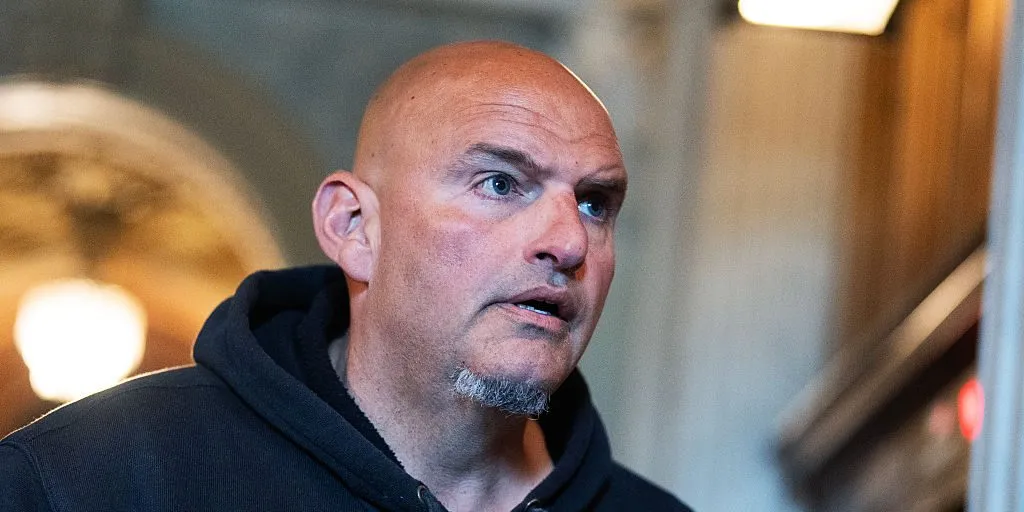
    Republican Rep. Thomas Massie lost his Kentucky primary on Tuesday, handing a victory to the president in a race seen as a referendum on Donald Trump.

    Read more Trump’s “Anti-Weaponization” Fund Is a Handout to His Hardcore Supporters

    It also reaffirmed the grip of the American Israel Public Affairs Committee in GOP politics.

    AIPAC’s super political action committee and two other groups backed by pro-Israel donors poured more than $15.8 million into the race either opposing Massie or supporting his opponent, former Navy SEAL Ed Gallrein, according to Federal Election Commission reports released through Tuesday.

    That blizzard of cash may not have been as important for Republican primary voters as Trump’s hatred of Massie. Still, it helped make the 4th Congressional District race the most expensive House primary in history, with overall spending reaching $32 million, topping the 2024 New York Democratic primary in which AIPAC’s super PAC aided Westchester County Executive George Latimer in ousting then-Rep. Jamaal Bowman.

    Massie had framed the race in terms that led to accusations of antisemitism, calling it “a referendum on whether Israel gets to buy seats in Congress.” He denied the charge and repeated similar language in his concession speech Tuesday night. “For 14 years, those S.O.B.s in Washington tried to buy my vote,” Massie said. “Why did the race get so expensive? Because they decided to buy the seat.”

    Massie is a libertarian contrarian who reliably votes for the conservative position on measures in the House — but he has generated headaches for Trump on everything from the Justice Department’s files on Jeffrey Epstein to the NSA’s surveillance of Americans.

    He has also been a critic of U.S. funding for Israel and the war on Iran. His vote has helped make every attempt at blocking the conflict through a war powers resolution bipartisan, although so far all of them have fallen short.

    A spokesperson for AIPAC’s super PAC, the United Democracy Project, described Massie as “the most anti-Israel Republican in the House.”

    The Kentucky representative says he is taking a stand on principle: He has always opposed foreign aid in general.

    Read more Xavier Becerra Pushed to Inflate a Black Man’s IQ to Execute Him as California AG

    “I have never voted for foreign aid to Egypt, to Syria, to Israel or to Ukraine,” Massie told CBS News. “But the ones in Israel, since they’re the biggest recipients of it, that makes them a little bit mad.” 

    Republicans still overwhelmingly support Israel, according to public opinion polls. But the share who do so has declined significantly over the last few years, and younger GOP voters are much less supportive of unconditional funding for Israel.

    When he emerged for his concession speech on Tuesday, a grinning Massie told the crowd, “I would have come out sooner but I had to call my opponent and concede, and it took a while to find Ed Gallrein in Tel Aviv.”

    In a statement congratulating Gallrein on Tuesday, AIPAC announced that voters “support Democratic and Republican candidates who view a strong U.S.-Israel relationship as an American interest and reject those who focus on attacking that alliance and pro-Israel Americans.”

    “Massie has been one of the most consistently hostile voices in Congress toward the U.S.-Israel relationship and the millions of Americans who support it,” read the AIPAC statement posted on X. “Our community was proud to support Gallrein and help ensure Massie’s defeat.”

    The race was dogged by accusations of antisemitism and salacious, negative advertising. Massie’s opponents seized on a pro-Massie super PAC’s television ad that featured a picture of anti-Massie billionaire donor Paul Singer with a rainbow Star of David and that accused Gallrein of being backed by “the gay mafia.” Meanwhile, the anti-Massie camp created a deepfake artificial intelligence ad pointing to the few times he crossed party lines to accuse him of being in a “throuple” with progressive Reps. Alexandria Ocasio-Cortez, D-N.Y., and Ilhan Omar, D-Minn.

    Singer was the largest donor to MAGA KY, the Trump-supported super PAC that was created specifically to oust Massie.

    Also spending against the representative were the United Democracy Project and the Republican Jewish Coalition Victory Fund.

    Read more Who’s Spending in Your Congressional Election? We Tracked the Front Groups Fueling the 2026 Midterms.

    This developing story has been updated.

  • Trump’s “Anti-Weaponization” Fund Is a Handout to His Hardcore Supporters

    Trump’s “Anti-Weaponization” Fund Is a Handout to His Hardcore Supporters

    In yet another staggeringly corrupt and unprecedented move, President Donald Trump’s Justice Department on Monday announced a $1.776 billion slush fund, drawn from public coffers, to funnel payouts to Trump loyalists.

    Read more Xavier Becerra Pushed to Inflate a Black Man’s IQ to Execute Him as California AG

    The fund is part of a deal decided by the Trump administration to drop its weak $10 billion lawsuit against the IRS over a leak of the president’s tax returns. The entire lawsuit had itself become an egregious example of self-dealing: Trump’s Justice Department suing Trump’s IRS on behalf of Trump.

    Over 90 House Democrats recently signed an amicus brief to the presiding judge asking that she dismiss the suit. A settlement, the Democrats wrote, would create a “specter of corruption unparalleled in American history.”

    Before the judge could respond, however, Trump withdrew the lawsuit and moved to set up something even worse than that specter: a slush fund beholden entirely to Trump, with little in the way of judicial or congressional oversight.  

    According to the Justice Department announcement, the so-called “anti-weaponization” fund — to remedy the purported weaponization of the U.S. government — will be paid out to Trump allies who claim they were targeted by President Joe Biden’s administration. The irony that the fund itself is just one of Trump’s countless weaponizations of the government should be lost on no one.

    The fund amount — $1.776 billion — is, of course, an on-the-nose reference to American independence and tells us everything we need to know about this deal. For most of the country, there is little of substance in this too-cute-by-half dollar amount. Instead, the material benefit will go to the largely to the white ruling classes with some crumbs for Trumpian militia members convicted under Biden.

    Trump’s reckless and brutal presidency is materially harming the American working classes — even the white working class. With his popularity at historic lows, Trump can only turn to payouts like this, pardons, and the spectacle of white supremacist violence; these are all he has to offer his allies and dwindling base.

    That’s what this slush fund does: nod to Trump’s allegiance to his supporters, the vast majority of whom will get little other than the mood elevation that comes with having their resentments recognized — what W.E.B. DuBois once called the “psychological wages” of whiteness, a benefit that is only felt by virtue of the greater oppression of others.

    Trump’s authoritarian capitalism will not, after all, uplift the white working class; there aren’t enough U.S. Immigration and Customs Enforcement signing bonuses or slush-fund payouts to go around.

    January 6 Loyalists

    The slush fund money would come directly from the Treasury Department’s Judgment Fund, which is typically used to pay legally reached settlements and court judgments. But in this case, a commission picked by Trump’s attorney general will apparently hand out payments as it pleases.

    Read more Who’s Spending in Your Congressional Election? We Tracked the Front Groups Fueling the 2026 Midterms.

    No specific recipients have been named yet, but beneficiaries could reportedly include Proud Boys and other January 6 Capitol rioters, many of whom have since pardoned by Trump.

    The fact that any payouts will be funded by taxpayer dollars is not mentioned in the Justice Department’s fund announcements.

    “This is a theft far worse than Watergate,” wrote civil rights attorney Aaron Reichlin-Melnik on social media. “There is no other word for it. They are stealing $1.78 BILLION dollars to pay Trump’s allies, despite knowing that these people are not legally entitled to any money.”

    The Trump regime hopes programs like this “anti-weaponization” fund can appease just enough of an active base to hold power under minority rule, while enriching all those in Trump’s inner circles who in turn stick by his side regardless of what happens in elections.

    Rep. Jamie Raskin, D-Md., told the New Republic that he sees the fund as Trump and his lawyers “figuring out a way to refund the January 6 militia, presumably to get them ready for the next round of battle.”

    Raskin added that, should the Democrats retake the House and Senate in the midterms, they would shut down the fund and demand transparency about any payments made. According to the Congress member, any payouts to January 6 participants would violate the Fourteenth Amendment by aiding in an insurrection against the U.S. It is, however, no easy task to claw back money once doled out.

    “It is my personal opinion that this is a criminal act and people should respond accordingly,” noted Reichlin-Melnik.

    The problem is that for Trump’s regime and its loyal Supreme Court, the distinction between presidential criminal corruption and permissible executive action has all but evaporated.

    The challenge, then, is to show that Trump’s meager offerings are not worth accepting.

    Read more A “Scheme” Against Dobbs: SCOTUS Dissent Hints at Next Phase of Abortion Rights Fight

  • Xavier Becerra Pushed to Inflate a Black Man’s IQ to Execute Him as California AG

    Xavier Becerra Pushed to Inflate a Black Man’s IQ to Execute Him as California AG

    When leading California gubernatorial candidate Xavier Becerra was state attorney general, his office pushed the state Supreme Court to artificially inflate a Black man’s IQ in order to execute him. 

    Read more Who’s Spending in Your Congressional Election? We Tracked the Front Groups Fueling the 2026 Midterms.

    Following the lead of his predecessor, former California Attorney General Kamala Harris, Becerra’s office was battling a defense that argued Robert Lewis, originally sentenced to death in 1991, was ineligible for execution because he was intellectually disabled. Lewis’s attorney, Robert Sanger, told The Intercept that while individual attorneys general can’t control everything their deputies do, he was disappointed with how Becerra’s office handled the case. 

    “I was kind of feeling like it would be a good time for the AG to say, ‘OK, we tried and he’s intellectually disabled. We got that determination made. Let’s just let it go,’” Sanger recalled. “Instead, it went all the way to oral arguments in front of the [state] Supreme Court.”

    The effort failed: The Supreme Court of California overturned Lewis’s death sentence in 2018, and the state legislature overwhelmingly passed a measure banning the practice of adjusting IQ based on race in death penalty cases two years later. 

    Becerra is now polling first in the crowded race to replace term-limited Democratic California Gov. Gavin Newsom. His campaign had at first lagged behind his opponents, but then-Rep. Eric Swalwell was hit with explosive sexual assault allegations — which he denies — and dropped out, and Becerra surged to the front of the field. He’s just ahead of Trump-backed Republican candidate Steve Hilton, followed by Tom Steyer, the hedge-fund billionaire racking up endorsements from progressive groups including Our Revolution and praise from the California chapter of the Democratic Socialists of America. 

    In Lewis’s case, Becerra picked up where Harris left off; her office had been the first to ask the courts to artificially inflate Lewis’s IQ so the state could execute him. 

    “On the one hand, he’s part of a long line of Democratic attorney generals who have taken this approach of, ‘It’s not my problem,’ not accepting responsibility for what their criminal attorneys are doing in court,” said Natasha Minsker, who leads the California Anti-Death Penalty Coalition, which helped push the bill banning the practice of race-based IQ adjustments for people on death row. “On the other hand, it just demonstrates where their true priorities and values are.” 

    Becerra has not taken a clear public position on the death penalty in his gubernatorial campaign, but his critics have raised concerns about his pursuit of executions at a time when his party was moving in the opposite direction. He has said he has “serious reservations” about the death penalty and voted for a 2016 state ballot measure to abolish it in California, where the state hasn’t executed anyone since 2006. Still, two years after his vote, Becerra’s office argued to execute Lewis. Though Newsom imposed a moratorium on capital punishment in 2019, Becerra fought to uphold death penalty sentences during the Covid-19 pandemic. And though he oversaw law enforcement for four years in California, a state that has significantly cut its prison population in recent years and adopted other reforms under pressure from activists, Becerra’s criminal justice record has not played a large part in his gubernatorial campaign. 

    After serving as California attorney general, Becerra was named secretary of Health and Human Services during the Biden administration. His name recognition from that post, plus 24 years in Congress, have earned him endorsements from Democrats including Reps. Jim Clyburn, D-S.C., and Ted Lieu, D-Calif.; state and local elected officials; and several labor unions including SEIU California, California State Council of Laborers, and the United Nurses Associations of California.

    Still, his former colleagues from his time leading HHS raised eyebrows as his campaign gathered speed after Swalwell’s exit, and some of Becerra’s critics have seized on his overseeing of migrant children as HHS secretary. Also looming behind his surge is a criminal trial involving his former political adviser and Newsom’s former chief of staff, Dana Williamson, who pleaded guilty on Thursday to three felonies in a corruption case involving scheme to steal money from Becerra’s campaign. In a statement last week after the plea, Becerra said; “As I said from day one, I was not involved, I did nothing wrong. And now the record confirms it. We can close the book on this.”

    Becerra’s criminal justice record has received less scrutiny in the gubernatorial race, where Becerra is competing with Republican opponents stressing their own tough-on-crime bonafides. 

    Becerra’s campaign website outlines his priorities as fighting Donald Trump, building more affordable housing, lowering costs, building clean energy, improving California’s disaster preparedness, channeling AI “for human benefit,” and addressing homelessness. It does not have a specific page devoted to criminal justice. 

    In response to a questionnaire from the political arm of the California chapters of the American Civil Liberties Union, which declined to comment on Becerra’s record for this story, Becerra said he agrees with reforms like prioritizing prevention strategies over punitive sentencing and improving funding and staffing for public defender’s offices. He also said he would support banning facial recognition in police body cameras, more public access to police records, and having social service workers respond to homelessness and mental health crises instead of police. 

    “We see this repeatedly,” Minsker said. “Democratic politicians want to take credit for the progressive things they did as attorney general, but they are not taking responsibility for the regressive positions that the office advanced under their leadership.” 

    Read more A “Scheme” Against Dobbs: SCOTUS Dissent Hints at Next Phase of Abortion Rights Fight

    Becerra’s campaign did not respond to a request for comment. 

    While Becerra has not had to thoroughly address his criminal justice record yet on the campaign trail, the topic plagued his predecessor as attorney general, Kamala Harris, when she ran for president in 2020. 

    Harris, who served as California attorney general from 2011 to 2017 and San Francisco district attorney before that, faced myriad attacks from left and right that hampered her first presidential bid over her prosecutorial record while she campaigned as a reformer. 

    At the time, activists across the United States were animated by the police killings of George Floyd and Breonna Taylor, which set off a wave of protests and heightened scrutiny of so-called “tough on crime” politics. Six years later, the political winds have largely shifted.

    Sanger, the attorney in the IQ death penalty case, said he felt that some of the attacks on Harris were unfair, because attorneys general “can’t go through and regulate every single thing that their deputies do in these very complex cases.” But, he added, he’s been generally dissatisfied with California’s last three top prosecutors. 

    “I have been disappointed in each one of those attorneys general in not taking a more active role with their deputy attorneys general, and with them not taking a position on the death penalty,” Sanger said. 

    As attorney general, Becerra also faced criticism for shielding police from measures designed to hold them accountable. Two major California newspaper editorial boards wrote scathing criticisms in 2019 saying Becerra sided with law enforcement “against public transparency” and had betrayed both “public trust and the law” by not complying with a state police transparency law. 

    At the time, Becerra threatened to charge journalists with crimes unless they destroyed a list of police officers convicted of crimes. Becerra took more than $300,000 in campaign funds from law enforcement unions in his run for attorney general. The political action committee for the California Correctional Peace Officers Association, a state prison guards’ union, gave $320,000 to a group backing Becerra and other candidates that cycle. News outlets raised questions about his ability to “police the police,” while owing much of his campaign support to their unions. 

    The prison guard’s union gave $25,000 in March to a group opposing Steyer. The group, “California is Not for Sale, No on Steyer for Governor 2026, a Coalition of Housing Advocates, Labor and Small Business,” is spending $24 million against Steyer and is backed by the state’s real estate and energy industries. Steyer is self-funding his campaign with more than $120 million. The CCPOA did not respond to a request for comment.

    The prison guards’ union is one of many special interest groups that have played an outsized role in California politics, said James King, a formerly incarcerated prison reform advocate in Oakland. King, who is supporting Steyer, said the CCPOA was spending against Steyer because he is campaigning against those kinds of special interests. Plus, the union wants to preserve its budget, which has increased even as the state has shrunk its prison population in recent years, King said.

    “It’s deeply ironic” that groups including the CCPOA “are funding an initiative called ‘California is Not for Sale,’” King said. “They have shown time and time again that they are only interested in advancing the status quo. And it’s clear that any candidate they are working to oppose and spending money to oppose, they must see as a threat to the status quo.” 

    In 2020, Becerra sided with law enforcement again to oppose a bill to require independent state investigations of police killings after previously having refused to conduct an independent investigation into the police killing of 22-year-old Sean Monterrosa, whom a police officer shot in the back of the head. Becerra’s office later launched an investigation into destruction of evidence in the case. 

    Monterrosa’s sister, Michelle Monterrosa, told the San Francisco Standard last week that she won’t vote for Becerra in the gubernatorial election. “How can we trust someone who continues to put his own advancement before actually standing with the people?” Monterrosa said. 

    Read more The Short and Ridiculous Trial of a Protester Arrested in an Inflatable Penis Costume

  • Who’s Spending in Your Congressional Election? We Tracked the Front Groups Fueling the 2026 Midterms.

    Who’s Spending in Your Congressional Election? We Tracked the Front Groups Fueling the 2026 Midterms.

    The bitter Michigan Senate primary was heating up earlier this month when a mystery group bought $5 million in TV ads boosting the American Israel Public Affairs Committee’s preferred candidate in the Democratic race, Haley Stevens.

    Read more A “Scheme” Against Dobbs: SCOTUS Dissent Hints at Next Phase of Abortion Rights Fight

    The group had an anodyne name — the Center for Democratic Priorities — and no track record in Michigan politics. It was incorporated in Delaware seven months ago under a shroud of secrecy.

    Online sleuths soon discovered, however, that whoever was behind the group had used the same consulting firm employed by a super PAC affiliated with AIPACs to buy the ads. Suspicions fell on the pro-Israel lobbying shop or its super PAC affiliate, which has repeatedly created so-called “pop-up” super PACs to influence elections elsewhere. AIPAC issued a denial that it was funding the ads.

    Thanks to Federal Election Commission rules, voters may not know the true source of the ad campaign for months.

    With the Supreme Court’s Citizens United decision 16 years ago, special interest groups began using a raft of loopholes to pour money into elections without disclosing who was doing the spending. Super PACs can take in unlimited donations and spend unlimited amounts — as long as they do not coordinate directly with candidates. Now, big money forces in politics are growing ever more sophisticated about exploiting legal loopholes to obscure their identity.

    Today, groups are setting up pop-up affiliates, gaming disclosure deadlines, and using party-specific conduits — akin to a sub-political action committee — to help deflect attention away from the origins of their cash.

    “All their spending on election ads immediately before a primary or general election is anonymous to voters — particularly when they use names that have no meaning and have no indication of the broader groups they are tied to,” said Shanna Ports, senior legal counsel at the Campaign Legal Center and a former attorney in the Federal Election Commission’s enforcement division. “They are very damaging to transparency for that reason.”

    In the 2026 election cycle, front groups are proliferating, with cryptocurrency and artificial intelligence industries getting in on AIPAC’s game.

    Groups aligned with the two tech industries have split their operations into Democratic- and Republican-aligned affiliates. The benefit can be twofold: obscuring the ultimate source of the donations, while also attracting from the large pool of partisan funders who want to give donations solely to one party.

    The “pop-up” super PACs and party-affiliate PACs are not always “dark money” — a loosely defined term that generally refers to political operations that don’t disclose their donors’ identities. Nevertheless, the way they are set up can make it much more difficult for voters to follow the lavish campaign spending.

    Campaign finance experts say the trend is poised to continue unless Congress and the FEC decide to act. Until then, here is a guide to who is funding the groups, what they are called and how they work.

    Pop-Up Politics

    AIPAC used a complicated web of political committees to influence the Illinois primary elections in March. Whether or not it is using the same tactics in Michigan — the group did not respond to a request for comment — observers expect it to continue to hide its campaign spending in the months to come, as primary candidates battle over AIPAC’s influence.

    AIPAC itself is a tax-exempt nonprofit, which prohibits direct engagement with electoral politics. But the group is publicly affiliated with a traditional political action committee that can take donations of up to $5,000 per year; AIPAC PAC can donate directly to candidate campaigns.

    AIPAC’s supporters can also give to United Democracy Project, a so-called “super PAC.” United Democracy Project is openly affiliated with AIPAC, an increasingly toxic brand among Democrats.

    As AIPAC weighed involvement in the recent Illinois primaries, three new “pop-up” super PACs took advantage of campaign finance reporting loopholes to hide their donors’ identities. The groups — Elect Chicago Women, Affordable Chicago Now, and Chicago Progressive Partnership — were created so late in the campaign that they were only required to disclose their donors after voting in the primary was over.

    The groups’ donors were finally revealed after the election. They included two wealthy Chicago political donors: Michael Sacks, the CEO of an asset management firm, and Anthony “Tony” Davis, the co-founder of a private equity firm.

    Before those groups filed official campaign finance reports, journalists had built a circumstantial case linking them to AIPAC through the use of campaign vendors linked to the pro-Israel lobby group.

    Eventually, the hard truth emerged. FEC reports filed after the election revealed that Elect Chicago Women and Affordable Chicago Now got funds from United Democracy Project. Then Elect Chicago Women turned around and handed $1 million to the third group, Chicago Progressive Partnership.

    That complicated two-step helped Chicago Progressive Partnership conceal its donors as it was running ads that many observers said were misleading. In Illinois’s 9th Congressional District, the group attempted to boost one pro-Palestinian candidate in an apparent attempt to harm another, the influencer Kat Abughazaleh. Abughazaleh ultimately lost.

    In the same congressional race, Elect Chicago Women spent money to support state Sen. Laura Fine and oppose progressive Evanston Mayor Daniel Biss, who won.

    In other races, it was easier for voters to track how AIPAC-aligned groups were spending their money. In some of the contests, the pop-up super PACs never popped up. Instead, United Democracy Project spent directly.

    In Michigan, the new group Center for Democratic Priorities has yet to file any registration documents with the FEC. If it is classifying itself as a super PAC, it will not have to file disclosures revealing its donors until July 15, according to Ports.

    Gambling on Races

    With AI and crypto becoming increasingly ubiquitous, Washington is trying to sort out the regulations that could have huge impacts on these industries. In turn, crypto and AI businesses are making huge investments in electoral politics. So far, however, crypto and AI have taken a different approach to influencing elections than AIPAC. Rather than using “pop-up” super PACs, they have divided their influence operations into Republican and Democratic affiliates.

    The biggest crypto super PAC is called Fairshake. The group is funded by Silicon Valley venture capital firm Andreessen Horowitz, as well as two crypto companies the firm has invested in, Coinbase and Ripple Labs.

    The venture capital firm’s co-founder Marc Andreessen rose to fame in the 1990s for co-founding the web browser Netscape. More recently he has become notable as one of Donald Trump’s biggest defenders in the tech world and a frequent visitor to Trump’s Florida estate Mar-a-Lago.

    Fairshake spends money on Republican primaries through its GOP affiliate, Defend American Jobs, and Democratic races through an outfit called Protect Progress. Fairshake has portrayed itself as an equal-opportunity shop, but the group’s extraordinary spending in favor of Republican candidate Bernie Moreno in 2024, when he ousted former Democratic Sen. Sherrod Brown in Ohio, opened it up to accusations of partisanship.

    Read more The Short and Ridiculous Trial of a Protester Arrested in an Inflatable Penis Costume

    Brown is now running to return to the Senate against JD Vance’s Republican replacement, Jon Husted. His rhetoric this time around has been notably more muted when it comes to crypto.

    Fairshake’s split personality allows donors to pick a single-party affiliate for its campaign giving. Democratic megadonor and angel investor Ron Conway donated to Protect Progress in 2024, for instance, only to announce later that year that he was breaking from the network over its support of Moreno.

    The model of using party-specific affiliates may be less deceptive than “pop-up” super PACs, Ports said, but it is still misleading.

    “They know that a Republican voter doesn’t want to hear from a super PAC that supports Democratic candidates. [Republican voters] are not going to trust that messaging as much, or vice versa,” she said. “They are dividing this money up to try to present their message as persuasively as possible to their target audiences.”

    Fairshake’s spending on Republicans has not gone far enough for some figures in the fractious crypto world. The Winklevoss twins — the brothers behind a top Coinbase competitor, a cryptocurrency exchange called Gemini, which is distinct from Google’s AI assistant — have given millions’ worth of bitcoin to the Digital Freedom Fund PAC, which is explicitly opposed to the Democratic Party. The Digital Freedom Fund has also drawn donations from crypto exchange Kraken, another Coinbase competitor. So far the PAC has not spent heavily on political campaigns, but that could change as the midterm election season heats up.

    Yet another crypto political action committee, The Fellowship PAC, is chaired by an executive at the domestic affiliate of the international stablecoin company Tether, which has recently begun mounting a push into the U.S. market. The company is backed by $10 million in donations from Cantor Fitzgerald, the bank that holds the U.S. Treasury notes backing Tether’s stablecoins. Former Cantor Fitzgerald chief Howard Lutnick serves as Trump’s commerce secretary. The PAC has endorsed only Republican candidates thus far.

    Artificial Interference

    Two of the artificial intelligence industry’s biggest players are backing rival political influence operations. OpenAI and Anthropic have picked their fighters in a battle over how much of a role the government should play in regulating AI.

    On one side, OpenAI President Greg Brockman and his wife have donated to Leading the Future, a super PAC that aims to be an umbrella organization for the industry along the lines of Fairshake.

    Perplexity AI and Andreessen Horowitz — which was an early investor in OpenAI — have also given money to the umbrella super PAC.

    Leading the Future has a Democratic affiliate, Think Big, as well as a Republican arm, American Mission. Conway, the Democratic megadonor, has given only to Think Big, while Joe Lonsdale, the voluble right-wing venture capitalist, has given to American Mission.

    If that structure sounds eerily similar to Fairshake, that is no accident. One of Leading the Future’s shot-callers is Josh Vlasto, a political operative who once worked for two powerful New York Democrats: former Gov. Andrew Cuomo and Senate Minority Leader Chuck Schumer.

    OpenAI has generally favored a more relaxed approach to AI regulation. One of its top competitors, Anthropic, has staked out a position — at least rhetorically — in favor of stricter rules.

    To pursue that aim, Anthropic recently created a traditional corporate political action committee, AnthroPAC, that can donate directly to politicians.

    The $380 billion company has also made a major donation to a political nonprofit called Public First Action. That group sits at the heart of a network of affiliated super PACs: the bipartisan Public First PAC, the Democratic-aligned Jobs and Democracy PAC, and the Defending Our Values PAC for Republican causes.

    The Republican and Democratic affiliates are led respectively by former Reps. Chris Stewart, R-Utah, and Brad Carson, D-Okla.

    Public First Action has donated to all three super PACs. In a statement to The Intercept, a spokesperson called the three PACs “aligned” but said they all operate independently and that Anthropic does not play a role in directing any of the groups’ political spending.

    “Public First Action did not establish Jobs and Democracy PAC, Public First PAC, or Defending Our Values PAC, all of which are independent from Public First Action and were established separately,” said the spokesperson, Anthony Rivera-Rodriguez.

    In a recent North Carolina primary, Public First Action’s Democratic affiliate spent $1.6 million boosting incumbent Rep. Valerie Foushee over her opponent Nida Allam, a Durham County commissioner who has supported a moratorium on AI data center construction.

    Allam told The Intercept that she believes the Anthropic-backed super PAC network has split its spending arms into Democratic and Republican affiliates to blunt attacks like those that have dogged United Democracy Project. AIPAC’s super PAC has long faced criticism in Democratic primaries for drawing donations from Trump-supporting billionaires.

    Anthropic and its backers “are trying to confuse folks to say, ‘we’re not the same,’ so that their spending is not on the same FEC reports,” she said.

    Anthropic voluntarily disclosed its donation to Public First Action. But since the group is set up as a nonprofit rather than a campaign committee, voters may never know who Public First Action’s other donors are. And the group does not intend to disclose them, Rivera-Rodriguez said.

    “We’d welcome a broader conversation about transparency in political spending, starting with the hundreds of millions Big Tech companies are spending to prevent any regulation of AI whatsoever,” he said. “That said, Public First Action, Jobs and Democracy PAC, Public First PAC, and Defending Our Values PAC make all public disclosures required by law either to the FEC or the IRS, and those filings are publicly available online. Additionally, all advertisements by those groups include the required disclaimers identifying who is paying for the advertisement.”

    Allam is convinced that spending from AIPAC and the Anthropic-backed groups helped tip her race. She claimed 48.2 percent of the vote compared to Foushee’s 49.2 percent.

    “For the incumbent to not receive more than 50 percent of her district’s support, that shows you that working families want change, they want something different,” she said. “We can build a progressive grassroots movement without being aligned with the same people who gave us Trump and MAGA Republicans.”

    Correction: May 18, 2026, 12:53 p.m. ET
    A graphic previously featured the Winklevoss twins as represented in the 2010 movie “The Social Network”; the images have been replaced with photos of the Winklevoss twins.

    Read more Kash Patel Is Using MAGA’s Favorite Tool to Muzzle the Free Press

  • A “Scheme” Against Dobbs: SCOTUS Dissent Hints at Next Phase of Abortion Rights Fight

    A “Scheme” Against Dobbs: SCOTUS Dissent Hints at Next Phase of Abortion Rights Fight

    Supreme Court Justices Clarence Thomas and Samuel Alito found themselves in the minority on Thursday, when the court ruled that telehealth access to the abortion drug mifepristone could continue, leaving the dissenting conservatives to foreshadow a future showdown over abortion rights.

    Read more The Short and Ridiculous Trial of a Protester Arrested in an Inflatable Penis Costume

    Both justices railed against the decision, with Alito calling it a “scheme” to get around their ruling in Dobbs v. Jackson that eliminated the nationwide right to an abortion in 2022. Abortions have increased since their decision, Alito lamented, largely due to telehealth access. 

    In 2025, far more residents of states with total abortion bans received telehealth provisions of medication abortion than traveled out of state to receive care in places with fewer restrictions. And roughly two-thirds of all abortions in the U.S. in 2023 were medication abortions. But advocates warn that the dissents from Thomas and Alito highlight that the threat to abortion access still looms large.

    “We’re breathing a sigh of relief. I would say that the immediate threat to mifepristone is over,” said Claire Teylouni, interim co-executive director of Reproductive Equity Now, “But it’s certainly clear from reading those dissents that the threat … is far from over.” 

    In his dissent, Thomas argues that the Comstock Act, an anti-obscenity law passed in 1873 that remains on the books but has not been enforced in decades, prohibits the mailing of abortion medication. “The Comstock Act bans using ‘the mails’ to ship any ‘drug … for producing abortion,’” Thomas wrote. “Applicants are not entitled to a stay of an adverse court order based on lost profits from their criminal enterprise.”

    The Comstock Act originally prohibited the mailing of “obscene” materials, such as pornography, contraceptives, and any drug or device that can be used to produce an abortion. But legal scholars have argued that the law is unenforceable and unconstitutional on First Amendment grounds and other modern case law. 

    In 2022, a Department of Justice clarified that the law does not prohibit the mailing of drugs that could be used to perform an abortion because there is “an insufficient basis for concluding that the sender intends them to be used unlawfully.” 

    Despite the memo and the fact that the Comstock Act has not been enforced in decades, conservatives, including Thomas and Alito, have been eager to use the law to push a national abortion ban.

    “Enforcement of the Comstock Act has the potential to threaten the broader supply chain with regard to the reproductive health care system as a whole,” warned Teylouni. Arguably if enforced, the law could even jam up access to surgical tools used in abortion care and the shipping of abortion medication to states without bans.

    Republican lawmakers have argued that the Comstock Act should be enforced by the courts to “prosecute those who obtain mifepristone through the mail.” In Project 2025, policy analysts similarly argue that the Department of Justice should enforce federal laws like Comstock to writ large.  

    President Donald Trump has previously claimed that he would not enforce the Comstock Act in this way, but advocates have seen troubling signs out of the administration about how they might eliminate access to mifepristone in other ways.

    “We’re focusing on some pressing threats that are already ongoing,” said Anna Bernstein, principal federal policy adviser at the reproductive and sexual health research organization Guttmacher Institute.

    In late 2025, the Food and Drug Administration began a safety review of mifepristone, despite over 20 years of evidence that it’s a safe medication. Bernstein said her organization is keeping a close eye on the “politically motivated” review at the FDA, which she argues flies in the face of the science.

    The combined regimen of mifepristone and misoprostol, the drug typically used in tandem with mifepristone to induce a medication abortion, carries a less than 1 percent risk of serious adverse events. Comparatively, the risk of maternal death associated with childbirth is roughly 14 times higher than the risk associated with abortion care.

    Read more Kash Patel Is Using MAGA’s Favorite Tool to Muzzle the Free Press

    But despite medical evidence of its safety, the threat to mifepristone from the FDA has increased in recent days. FDA Commissioner Marty Makary resigned earlier this week, and he was replaced by Kyle Diamantas, a former lawyer.

    Within hours of his appointment on Tuesday, Diamantas was reportedly on the phone with anti-abortion advocates reassuring them of his moral opposition to abortion. According to a press release sent from an anti-abortion advocate, regarding her conversation with Diamantas, she said that he promised that reviewing mifepristone would be a “top priority” and that he was “pro-life.”

    “We continue to have concerns that the [review is] going to be politicized and not based in science and medicine,” said Teylouni.  

    The Thursday ruling allows providers to continue to send mifepristone through the mail or to retail pharmacies, while the case plays out in the lower courts. Earlier this month, the 5th U.S. Circuit Court of Appeals had reinstated previous FDA requirements that mifepristone be dispensed in person, threatening telehealth access, a critical lifeline for abortion access for people in states with and without abortion bans. 

    The Supreme Court issued an initial ruling staying the appeals court decision earlier this month, which they extended on Monday, before making their final decision on Thursday to allow access to continue while the Louisiana v. FDA case plays out in court.

    But a looming concern for advocates is that both the courts’ more politically attuned conservatives and members of the Trump administration could be waiting to make a move on abortion access until after the midterms in a ploy to avoid the disasters of the post-Dobbs elections.

    “We’re definitely concerned, because we know that the Trump administration understands that it’s politically unfavorable to restrict access to abortion and to mifepristone,” said Guttmacher Institute’s Bernstein. “We’ve all seen the reports of them slow-walking to the midterms, and we know why politically they might want to do so.” 

    While the Comstock Act serves as a significant threat to abortion access, advocates note that if mifepristone is no longer able to be sent through the mail, people can still access medication abortion care. 

    Mifepristone works by stopping the pregnancy from growing and initiates the separation of the embryo from the uterine lining. The other drug, misoprostol, causes contractions which expel the contents of the uterus.

    Misoprostol can be safely and effectively used on its own to induce an abortion. However, the process of abortion “is prolonged when it’s with a misoprostol-alone protocol,” explained Dr. Ushma Upadhyay, a public health scientist at the University of California, San Francisco’s Advancing New Standards in Reproductive Health research coalition. “And patients report higher levels of side effects, so a lot of cramping and a lot more bleeding.”

    Despite the small victory yesterday, Teylouni said that abortion advocates cannot afford to be “complacent” right now. 

    “This decision could have been the biggest blow to abortion access since the Dobbs decision,” she said. “Anti-abortion extremists are not going to stop attempting to ban abortion, and they want to see the Comstock Act invoked and enforced to limit telehealth prescribing again.” 

    Read more “We Knew They Were Paying Informants”: SPLC Donors Reject Trump DOJ Fraud Claims

  • The Short and Ridiculous Trial of a Protester Arrested in an Inflatable Penis Costume

    The Short and Ridiculous Trial of a Protester Arrested in an Inflatable Penis Costume

    The trial of Renea Gamble had been underway for almost two hours when Marcus McDowell, the city attorney of Fairhope, Alabama, called a surprise witness.

    Read more Kash Patel Is Using MAGA’s Favorite Tool to Muzzle the Free Press

    “I call the gentleman in the red shirt,” he said, pointing toward a long-haired man in the second row. It took a moment to realize that he was referring to Gamble’s husband, 63-year-old Larry Fletcher.

    Gamble’s defense attorney objected. He’d received no advance notice. But Fletcher shrugged and made his way forward.

    Fletcher was with his wife when she was arrested at a No Kings protest in October 2025. She was wearing a 7-foot-tall inflatable penis costume and holding a sign that read “No Dick Tator.” Video of the incident went viral, turning Gamble into a minor celebrity and local free speech icon. Most people assumed the city would eventually drop the misdemeanor charges filed against her. Instead, McDowell added more, including giving a false name to law enforcement for identifying herself as “Aunt Tifa.”

    Fletcher wore black Levi’s and a collared shirt with a Ferrari logo – a nod to his work rebuilding fuel injection systems for high-end cars. Sitting in the front row, Gamble looked a bit stricken watching the man she’d known since her childhood in Baton Rouge. “I know what she was thinking,” Fletcher later said. “She’s like, ‘Oh man, this could go out of control real easy.’”

    McDowell asked Fletcher if he’d gone to bail his wife out of jail after her arrest. Yes, Fletcher said.

    Did he make any statements to any of the jailers? Fletcher wasn’t sure. McDowell motioned toward one of the many law enforcement officers standing on the side of the room and asked if he looked familiar. Fletcher said he’d seen him around.

    McDowell cut to the chase: Did Fletcher remember telling this man that he had gone to get bail money the day before the protest?

    His objective was suddenly clear: The city attorney was suggesting that Gamble had gotten arrested on purpose.

    If this was meant as a gotcha, things didn’t go as intended.

    “I always make sure I have bail money!” Fletcher replied emphatically, as if this should be the most obvious thing in the world.

    Did he have bail money on him now?

    “Yeah!” Fletcher exclaimed, then gestured broadly. “With this many cops around? Come on.”

    The room erupted with laughter. Moments later, Fletcher was back in his seat. Gamble reached back and held his hand.

    The trial took place at the Fairhope Civic Center, home to the city council chamber and — on the first and third Wednesday of every month — municipal court. Outside the building, dozens of people gathered to support Gamble, while a small army of cops stood watch from inside. One woman wore a huge purple eggplant costume. Another held a sign featuring a banana and the words “Free speech shouldn’t be hard to swallow.”

    Gamble, 62, had arrived wearing pearls, a soft pink cable-knit sweater, and a matching tulle skirt adorned with delicate butterflies. Her face was concealed behind sunglasses and a white KN95 mask. After a smattering of chants of “Free speech!,” Gamble spoke briefly before going inside. “I’m not on trial,” she said. “What’s on trial is the First Amendment.”

    “It was abuse, too!” one woman yelled. “They abused you. We saw it.”

    Indeed, for all the slapstick comedy of the scene — body camera footage showed three different cops wrestling with a giant penis — her arrest was also shocking. Gamble was turning to walk away when the arresting officer grabbed her costume from behind, pulling her backward onto the ground. While officers tried to stuff her into their car, causing the handcuffs to dig into her wrists, she screamed in pain.

    But Gamble said she wasn’t speaking as a victim. “I’m standing on the foundation of our democracy. If we don’t have free speech, what do we have?”

    Fairhope is a picturesque town on Alabama’s Gulf Coast, 20 miles from Mobile. Its entrance is lined with live oaks and a procession of American flags, while its historic downtown is brimming with galleries and upscale boutiques. Around the corner from a Christmas store, clapboard signs advertised espresso martinis and peanut butter pie.

    Fairhope has long been a top destination for retirees from across the country, with its rapid growth an enduring source of anxiety. Although the No Kings rally was organized by Indivisible Baldwin County, whose founder was born and raised in the area, local critics adopted a familiar line: The protesters were outside agitators. Never mind that Fairhope itself was originally founded by outsiders as a “single-tax” utopia, “built by and for artists, writers and other ne’er do-wells,” in the words of local political cartoonist JD Crowe, who attended Gamble’s trial with his sketchpad. Today, some describe Fairhope as “California with a Southern accent” — a compliment or an insult, depending on who you ask.

    Gamble’s case struck a nerve in part because of an ongoing free speech battle that made national news. Right-wing activists had targeted Fairhope’s beloved public library, convincing the state to pull funding over books they deemed obscene. Among the people gathered outside the civic center, several said they could not understand why city officials, including the mayor, stood up for the library only to express support for Gamble’s arrest.

    Others were driven by national politics. A man dressed in a taco suit was a member of Mobile’s Indivisible chapter. “This is all about Trump,” he said. The fact that people were protesting in this part of the state spoke volumes about the destruction Trump has wrought, he said. “This is deep-red Alabama — as red as it can get.”

    Presiding over the trial was Magistrate Judge Haymes Snedeker, best known as the older brother of champion pro golfer Brandt Snedeker and a noted amateur golfer himself. Snedeker sought to defuse the tension in the room, reassuring attendees at the start that, while Gamble technically faced the possibility of six months in prison, “that’s not gonna happen.”

    It was the city’s burden to prove its case beyond a reasonable doubt, Snedeker went on. “I’m just an umpire calling balls and strikes.” He had just asked people to silence their cellphones when a ringtone broke out, apparently from one of the police officers lining the room.

    “Bad start for the city,” Snedeker quipped.

    If Snedeker was trying to keep things light, McDowell, the city attorney, was not in a joking mood. It was no secret that Gamble was considering suing the city — and any potential lawsuit would be on him to defend. The threat of legal action helped explain why McDowell might have refused to drop the charges. If Gamble was convicted, after all, she would have no grounds to sue.

    Read more “We Knew They Were Paying Informants”: SPLC Donors Reject Trump DOJ Fraud Claims

    McDowell insisted that, while there is no constitutional right to dress as a giant “erect penis,” this case had nothing to do with the First Amendment. Gamble’s case was about public safety.

    He called the man who arrested Gamble: Fairhope Police Cpl. Andrew Babb. A 15-year veteran of the force, he testified that he’d been called to the scene due to reports of a disturbance at the busy intersection. When he pulled up, he spotted a “7-foot inflatable penis.” It was impossible to tell the identity of the person inside the costume, Babb said. He assumed it must be a teenager.

    Did you know it was an old woman?” McDowell asked him.

    “She’s not that old,” someone muttered in the audience.

    “No,” Babb said.

    Babb said he ordered Gamble to remove the penis suit. When she refused to comply, “she was put to the ground.”

    Babb denied that he’d been personally offended by Gamble’s costume. Rather, he was concerned that Gamble, who could neither see nor walk very well while wearing it, posed a risk to herself and others. “You saw her as an obstruction and a safety risk?” McDowell asked. Yes, Babb said.

    This was laughable. In his body camera footage, Babb repeatedly scolds Gamble for the costume, demanding to know how she would explain it to his kids. “I’m not trying to violate your freedom of speech,” he says as he unzips the penis suit. “I’m trying to preserve a town that has values.” Now McDowell was conjuring an alternate reality in which Gamble had teetered precariously at the edge of the road, endangering motorists, while the protest itself was veering close to a riot.

    “It was a brushfire,” Babb claimed at one point. “We were trying to stop it from spreading.”

    Gamble was represented by David Gespass, a veteran civil rights attorney who wore a Constitution-themed tie reading “We the People.” He asked Babb why he’d zeroed in on Gamble if his concern was traffic safety.

    “She was a distraction,” Babb said. “A distraction can be a hazard.” Gespass pointed out that Babb’s incident report invoked the legal definitions of obscenity: Why did he write that the penis costume was devoid of any “artistic value”? Babb replied that the protest took place at noon on a Saturday, in the midst of Little League baseball season, and on the same day as a funeral for a former mayor. “In that setting, it would be obscene,” he said.

    Much of Babb’s testimony was easily refuted by the body camera footage. Babb claimed that Gamble resisted arrest, and that he only called for backup once she was on the ground. In reality, he called for backup almost immediately. Babb claimed that he told Gamble she was “not free to go.” In fact, she repeatedly asked, “Am I being detained?” but he ignored her, continuing to scold her instead. When Gespass asked why Babb grabbed his client from behind, Babb claimed that he would not have been able to get in front of her — there were too many people in the way.

    But perhaps most preposterous was the claim that Babb’s actions were necessary to contain a situation that threatened to spiral out of control. “He made a clear professional effort to deescalate,” McDowell said. “She decided to escalate,” he said, “poking and prodding” in a deliberate attempt to get arrested.

    Listening to this, Gamble seemed to have a hard time containing her emotions. Even in her face mask, she looked stunned, indignant, and increasingly agitated. Her bright blue eyes widened. Her eyebrows raised upward. Once or twice, she threw her arms up in exasperation and disbelief. On her wrist, a warning flashed across the screen of her Snoopy-themed smartwatch: Her heart rate was spiking.

    For all the hilarity surrounding Fairhope’s “penis lady,” the arrest and its aftermath had taken a toll. Gamble’s adult daughter Adeana sat behind her mother at the trial, reading a library book during breaks in the testimony and occasionally communicating with her in sign language. She told me that Gamble had hit the back of her head when she fell to the ground, which was hard to see in the tape, and raised concerns about a possible concussion. She also worried about injury to Gamble’s wrists, especially because Gamble has long lived with rheumatoid arthritis. As a longtime ASL interpreter, “she’s always protected her hands,” Adeana explained.

    But the real cost had been psychological. For about two months, Adeana said, Gamble was afraid to leave the house. When threatening mail arrived at the family’s home, Adeana suggested calling the police. “And she said, ‘What police?’” How could she expect law enforcement to protect her? 

    The story behind the penis suit further undermined the case against Gamble. According to Adeana, Gamble purchased it at the last minute as a backup. “She had ordered a sea turtle costume,” Adeana said. She’d planned to wear it while holding a sign that said “I love the Gulf of Mexico.” But the costume didn’t arrive on time. “So she had to scramble to find another one and a message to go with it.”

    This context didn’t make it into the trial. Instead, Gespass called a slew of defense witnesses who attended the No Kings protest. One after another, they reiterated what was already clear: The rally had been peaceful. There was no threat to anyone’s safety. The only escalation came from the police.

    It was after 5 p.m. when Snedeker made clear he’d seen enough. He had already tossed the charge of providing a false name to police. Now he was ready to rule on the rest.

    Snedeker said that while he believed that police had probable cause to arrest Gamble, the city’s evidence was not strong enough to convict; Gamble was not guilty. The room broke into applause.

    Snedeker tried to put a positive spin on things, speculating that some good might come of the episode. For instance, police now knew to place barricades between the streets and a protest — a common-sense precaution. But the judge’s no-harm, no-foul sentiments fell flat. Fairhope police had made the town a laughingstock. Now the city was about to be sued.

    In fact, much of the trial seemed aimed at inoculating the city from a lawsuit. McDowell repeatedly emphasized that Babb’s actions were “reasonable” given the circumstances — the legal standard that judges use when dismissing claims of police abuse. Gespass also revealed that McDowell had offered a hasty plea deal just moments before the trial began. Gamble rejected it.

    “As Alabamians, we dare defend our rights, and this fight is not over,” she announced after her acquittal. On Friday, she served notice of a lawsuit with the city clerk.

    Whatever comes next, Adeana made clear that her mother was luckier than most. “What would have happened if she was a young Black man?” she asked. “What would have happened if she was a middle-aged Latina woman?” In Baldwin County, where Indivisible activists are focused on supporting immigrants targeted by U.S. Immigration and Customs Enforcement, Gamble’s prosecution has been a lesson unto itself. “If we don’t stand up and support our neighbors, who will?”

    Adeana understood why Gamble was so widely described as a “grandmother” in the headlines following her arrest. But the label didn’t capture the full picture. “If anything, we’re getting more explosive in our older age,” Adeana said. “Because we’re tired of being pushed down.”

    Read more Lawyer on EEOC’s New York Times Lawsuit Has History Battling Discrimination Against Men

  • Kash Patel Is Using MAGA’s Favorite Tool to Muzzle the Free Press

    Kash Patel Is Using MAGA’s Favorite Tool to Muzzle the Free Press

    Eoin Higgins is the author of “Owned: How Tech Billionaires on the Right Bought the Loudest Voice on the Left.”

    Read more “We Knew They Were Paying Informants”: SPLC Donors Reject Trump DOJ Fraud Claims

    Smarting from the humiliation of a report published at The Atlantic about his time in office, FBI Director Kash Patel did what conservatives have done over and over in the age of Trump: He sued for defamation. 

    The Atlantic’s story detailed allegations about Patel’s mismanagement of the office and FBI staffers’ concerns that his behavior has become borderline dangerous. According to the magazine’s reporting, staffers have observed that the director frequently drinks to the point of intoxication and has been unreachable behind closed doors multiple times, at one point necessitating agents breaking down a door. In his lawsuit, Patel said that the allegations are demonstrably false.

    Patel’s — which names the publication and the writer as defendants and demands $250 million in damages — doesn’t appear very strong; it’s unlikely he’ll win in court. But a legal victory isn’t necessarily the goal. Such lawsuits apply financial pressure and ensure newsrooms think twice before publishing critical articles in the future.

    For all the modern right-wing movement’s bleating about its commitment to free speech, in practice they’re anything but, with a demonstrated penchant for using the legal system as a cudgel against people who say things they don’t like. Known as strategic lawsuits against public participation, or SLAPP, they are a tool of the powerful — and have multiple levels of use.

    Most immediately, SLAPP allows plaintiffs the potential to muzzle their critics, who will be less likely to launch attacks against someone who has already proven litigious. This applies not only to the defendant, whether it’s an individual or an institution, but also to others like them who will think twice rather than risk a protracted (and expensive) legal battle.

    Typically, the more deep-pocketed someone, or their backers, are, the more they can bleed out defendants by dragging on court cases for as long as possible, racking up legal bills that will have to be paid. Most publishers and newsrooms have lawyers on retainer or in-house, but their legal insurance deductibles are still high, potentially running into the hundreds of thousands of dollars per case. 

    Even if these anti-free speech crusaders don’t win a judgment, they have a good chance of draining their opponents’ bank accounts — and breaking their spirits. 

    Federal action is is sorely needed to make sure the use of SLAPP doesn’t spiral further out of control. Many states, including New York and Minnesota, have anti-SLAPP laws on the books, but their application in federal courts remains unsettled. Patel filed his suit in D.C. federal court, where the appellate court says the anti-SLAAP statute does not apply. 

    Universal application of these laws is needed so the powerful can’t turn to federal courts for meritless filings, and some lawmakers, like Rep. Jamie Raskin, D-Md., and Sen. Ron Wyden, D-Ore., have introduced legislation to that end. So far, however, those bills have not made it to law. 

    Patel is far from the only conservative figure to deploy the courts as a weapon against his critics, and this isn’t even his first shot at it; he has an ongoing 2019 lawsuit against Politico, for that outlet’s reporting on his time with the National Security Council during Donald Trump’s first term, and another defamation action, against former FBI official Frank Figliuzzi for comments on MS NOW, was dismissed on Tuesday.

    Read more Lawyer on EEOC’s New York Times Lawsuit Has History Battling Discrimination Against Men

    Trump’s manipulation of the legal system to punish detractors predates his time in politics, but it’s gone into overdrive since his first term. The president has filed multiple defamation suits against members of the media and their organizations, including $475 million against CNN in 2022 (which was dismissed in 2023); the Pulitzer Prize Board for an award he objected to in 2022 (ongoing); journalist Bob Woodward and his publisher Simon & Schuster in 2023 (dismissed); ABC News in 2024 (settled for $15 million); CBS parent Paramount in 2024 (settled for $16 million); the Wall Street Journal in 2025 (dismissed), the New York Times in 2025 for $15 billion (ongoing), the BBC in 2025 for $10 billion (ongoing); and others. To be clear, this is not an exhaustive list. 

    Trump and Patel are two of the better known conservative figures attacking free speech via the courts, but it’s a mainstay tactic in MAGA world. Laura Loomer, an Islamophobic off-and-on ally of Trump, sued late-night personality Bill Maher over comments he made about her relationship with the president (the case was thrown out on Wednesday evening). In 2013, Trump sued Maher for breach of contract after the HBO pundit promised $5 million to charity if the then-real estate magnate could prove his mother was not an orangutan. (Trump withdrew the case.) 

    Elon Musk, the tech billionaire with close ties to the White House, used his X social media platform to file a suit against Media Matters for America over its reporting on ad content running alongside antisemitic posts on the site. And David Sacks, another tech billionaire who worked as Trump’s crypto and AI czar, threatened the New York Times over its reporting on his conflicts of interest in a public legal letter last December. 

    Closer to home, I’m currently being sued, along with my publisher, Hachette, for more than $1 million by conservative pundit Matt Taibbi over my book, “Owned: How Tech Billionaires on the Right Bought the Loudest Voices on the Left,” which delves into his ideological shift to the right. And the editor of this piece you’re reading now, Katherine Krueger, was sued for $100 million alongside her former employer Splinter by 2016 Trump spokesperson Jason Miller for a story about a court filing that alleged he drugged a woman with an abortion pill. Miller refuted the allegation, but that case was thrown out on summary judgment because it accurately reported what was in the court filing; mine is ongoing.

    In some circumstances, as Trump found after he was elected to a second term in 2024, SLAPP lawsuits can succeed, irrespective of the strength or weakness of the claim. ABC News and Paramount settled with Trump in what are widely regarded as payoffs to a powerful figure who can control their corporate future. Corporations have made the calculation: Better to get on his good side than risk four years of retribution, and, after all, what’s a few million dollars compared to the benefits of having the world’s most powerful person looking kindly on you?

    But for the right wing, SLAPP suits also serve to make an ideological point. Whether or not Patel expects to win a $250 million judgment, a central claim in his lawsuit is that his word is enough to shut down speech. 

    Because he told The Atlantic the claims in their article weren’t true, they shouldn’t have published it, the complaint argues: “Defendants published the Article with actual malice, despite being expressly warned, hours before publication, that the central allegations were categorically false.” The objections of a powerful man should be enough to avoid bad press, this line of reasoning goes; publishing anything to the contrary is wrong. 

    That’s the animating principle behind the right-wing’s relationship with the media. If they disagree with it or find it embarrassing, you shouldn’t publish it; if you disobey, you must be punished. 

    It wasn’t until Trump — and decades of ideological capture of the courts — that there was the potential to regularly use the legal system as a weapon against critics. Until there are First Amendment protections against SLAPP, we can expect the powerful to continue dragging their detractors to court. 

    Read more Marine Detained in Minneapolis Says Feds Copied His Phone Without a Warrant

  • “We Knew They Were Paying Informants”: SPLC Donors Reject Trump DOJ Fraud Claims

    “We Knew They Were Paying Informants”: SPLC Donors Reject Trump DOJ Fraud Claims

    More than a dozen donors to the Southern Poverty Law Center feel that a recent Department of Justice indictment accusing the group of defrauding contributors by paying informants is farcical, the donors told The Intercept.

    Read more Lawyer on EEOC’s New York Times Lawsuit Has History Battling Discrimination Against Men

    “It’s simultaneously infuriating and laughable that they’re charging the SPLC with funding hate groups,” said Mary Wynne Kling, an Alabama native and longtime supporter of the group. Pointing to the SPLC’s long-standing work battling extremist groups, which included bankrupting the United Klans of America, she added, “We knew they were paying informants.”

    The indictment, filed Tuesday in the SPLC’s home state of Alabama, charged the group with fraud for funding hate groups and with money laundering for setting up fictitious business entities to route payments to informants. SPLC leadership has denied the allegations.

    Kling and over a dozen other donors to the group told The Intercept that by using its money to root out information on hate groups, the SPLC was doing exactly what they hoped it would with their dollars.

    Originally founded in 1971 as a civil rights-focused legal clinic, the SPLC struck on a lasting strategy of direct confrontation with hate groups in 1979. It soon shifted its focus entirely toward combating the far right and documenting extremism in its “Hatewatch” project, which identifies hate groups and their leaders — a practice that has drawn the ire of right-wing figures enraged at being labeled as purveyors of hate.

    The Trump administration is taking aim at SPLC’s image by accusing the group of lying to its donor base and propping up the very groups it claims to fight in order to stay in business.

    “The SPLC is manufacturing racism to justify its existence,” said Acting Attorney General Todd Blanche in a statement released on Tuesday. “Using donor money to allegedly profit off Klansmen cannot go unchecked. This Department of Justice will hold the SPLC and every other fraudulent organization operating with the same deceptive playbook accountable. No entity is above the law.”

    FBI Director Kash Patel accused the group of taking advantage of the esteem in which its donors held the SPLC.

    “They raised money by lying to their donor network — thousands of Americans — to go ahead and pay the leadership of these supposed violent extremist groups,” Patel said the same day at a press conference.

    The Intercept put out a call for responses and sent a survey seeking reactions to the indictment, verifying that 20 respondents were SPLC contributors with proof of donation. Seven of them spoke to The Intercept in interviews; 13 others submitted responses to the survey. All 20 verified SPLC donors said they continued to support the organization and felt their money had been put to good use — including when used to pay informants inside groups like the Klan.

    Far from feeling defrauded, Ellie Wilson, a donor from Texas, said the indictment prompted her to make a new contribution to the group.

    “I read up on the story this morning, before I made my donation, and to me, it doesn’t sound unusual,” Wilson told The Intercept on Wednesday. “There’s overhead costs associated with either joining these groups or doing their proper research and due diligence. If my donation was used to pay for the people who are infiltrating these groups to, you know, cover their expenses to join, to add to their cover, I see no problem with it.”

    Read more Marine Detained in Minneapolis Says Feds Copied His Phone Without a Warrant

    According to the indictment against the group, some of the funds used to pay informants went to existing members of hate groups, including people who were already on the SPLC’s list of extremists. One such individual, identified in court documents as a former chair of the National Alliance with the code name “F-42,” allegedly received more than $140,000 from the SPLC while being featured on its “Extremist File” page, according to prosecutors.

    But according to Maya Lenox, a donor based in Texas, it’s only by working with such individuals that the SPLC is able to get the granular and encyclopedic information on the groups in its “Hatewatch” and “Hate Map” projects.

    “This is an organization that has been providing very detailed information about how these hate groups have been moving, and of course, in order to have that information, you essentially are going to need spies,” said Lenox. “In order to obtain this information, you’re going to have to make it worth their time.”

    In addition to the 20 verified donors, dozens of other self-identified donors to the SPLC, whose contributions were not independently verified, responded to The Intercept’s survey and expressed their support for the group and their skepticism of the indictment against it. Some respondents expressed mild criticisms of the group, pointing to controversy over its labor practices or accusations that its work chills free speech, but no respondent reported feeling deceived or defrauded by its use of paid informants in extremist groups.

    All seven people who spoke with The Intercept for this story rejected outright the claim that the actions outlined in the indictment amounted to fraud. Multiple donors added that they found the current Department of Justice difficult to trust given the agency’s documented history over the past year of politically motivated indictments against the perceived foes of President Donald Trump and the MAGA movement.

    “Anything that comes out of this administration, this FBI, or this Department of Justice, I have to take it with a level of incredulity that I find really unfortunate,” said donor Joe O’Donnell of Buffalo. “We’ve seen this administration truly pick and choose where they want to be and how they want to enforce.”

    The SPLC did not respond to a request for comment from The Intercept, but the group is receiving support from fellow civil rights organizations and other organizations on the left. In an open letter published Tuesday, the American Civil Liberties Union, the AFL-CIO, and more than 100 other civil rights groups, labor unions, and religious coalitions agreed to a mutual defense pact and committed to defend one another against attacks by the Trump administration.

    “We have the right to assemble—and we will continue to do just that, and we will encourage and support people and allied organizations to do the same, uniting across communities, sectors, issue areas and identities,” the pact declared. “We will not be silenced. We will continue to do the work that puts people over power.”

    Tuesday’s indictment against the SPLC is just the latest shot in a long-running war between elements of the MAGA right and the civil rights group. In 2019, the Center for Immigration Studies — a hard-line anti-immigration group whose platform mirrors many of the Trump administration’s platform — to get their group removed from the SPLC’s list of hate groups. In October, Patel and the FBI cut ties with the SPLC, which had been a longtime FBI partner, pointing to the work of his agency’s “Anti-Christian Bias Panel” and calling the SPLC a “partisan smear machine.”

    Many of the donors who spoke with The Intercept cited this long history of animosity between the MAGA movement and the SPLC as a reason to be suspicious of the indictment.

    “They’re in bed with groups that the SPLC has, in my opinion, rightly identified as hate groups,” said Kling, the donor from Alabama. “The SPLC has spent their entire existence fighting a lot of the things that it appears this administration supports.”

    Read more Zohran Mamdani Kept Columbia Student in New York — Then Phoned With Trump to Secure Her Release

  • Lawyer on EEOC’s New York Times Lawsuit Has History Battling Discrimination Against Men

    Lawyer on EEOC’s New York Times Lawsuit Has History Battling Discrimination Against Men

    The Equal Employment Opportunity Commission, a key achievement of the Civil Rights Act of 1964 and the federal agency tasked with protecting American workers from employment discrimination, sued the New York Times on behalf of a white man claiming the company discriminated against him based on his race and sex.

    Read more Marine Detained in Minneapolis Says Feds Copied His Phone Without a Warrant

    The lawsuit is signed not just by the agency’s acting general counsel and deputy general counsel, but also Benjamin North, who The Intercept reported was hired earlier this year as assistant general counsel.

    North was suspended as a college student over a rape allegation in a case that he claimed violated his civil rights; he has consistently denied the charges. North went on to do work arguing that Title IX, which prohibits gender discrimination at federally funded institutions, has been used to discriminate against the rights of men.

    North’s signature on the new lawsuit against the New York Times could mean he wrote it, said Chai Feldblum, a former EEOC commissioner.

    Asked about North’s role, EEOC spokesperson Victor Chen referred The Intercept to the complaint.

    The suit comes as part of President Donald Trump’s campaign against diversity, equity, and inclusion policies across the country, including his administration’s efforts to use the EEOC to these ends.

    The new EEOC suit, filed Tuesday on behalf of an unnamed man whose identity New York Magazine speculated about, alleges that the employee was passed over for a position because he is a white man.

    The claimant applied for a job as a deputy real estate editor in January 2025 but, the lawsuit claims, despite meeting all the requirements for the position, he didn’t get it because he “did not match the race and/or sex characteristics NYT sought to increase in its leadership.” Instead, the job went to a multiracial female candidate who the lawsuit alleges was not qualified.

    Feldblum, the former EEOC commissioner, was skeptical of the agency’s legal argument.

    “There is no actual evidence that he was more qualified than her,” Feldblum said. Of the EEOC, she said, “They’re putting out their best facts in this complaint, and the facts are pathetic.”

    Particularly for leadership positions, she pointed out, there are many aspects that go into deciding who is the most qualified candidate.

    “Their assertion that she was less qualified than him is based on their view of the facts,” she said. “We’ll see what the facts actually say.”

    In a statement, the New York Times said it has merit-based employment practices.

    “The New York Times categorically rejects the politically motivated allegations brought by the Trump administration’s EEOC,” said Times spokesperson Danielle Rhoades Ha. “Throughout this process, the EEOC deviated from standard practices in highly unusual ways. The allegation centers on a single personnel decision for one of over 100 deputy positions across the newsroom, yet the EEOC’s filing makes sweeping claims that ignore the facts to fit a predetermined narrative.”

    Diversity Without Discrimination

    The EEOC’s lawsuit claims that the company has “engaged in unlawful employment practices” since at least October 2024 through its diversity, equity, and inclusion policies. It cites the company’s self-published diversity goals, including a 2021 document setting a goal for increasing Black and Latino leadership by 50 percent within four years.

    Read more Zohran Mamdani Kept Columbia Student in New York — Then Phoned With Trump to Secure Her Release

    The Times was making “employment decisions on the basis of race and sex to achieve its desired demographic goals,” the lawsuit alleges. “A necessary consequence of NYT’s intent to increase the percentage of non-White leaders would be a decrease in the percentage of White leaders.”

    The assertion that the company has engaged in illegal racial and sex discrimination and is making employment decisions solely on those bases “is simply not borne out by the evidence,” Feldblum argued. The EEOC would instead have to have found evidence that hiring decisions were made expressly and intentionally based on such characteristics.

    Instead, the actions the New York Times took are “the most basic, acceptable, legal ways to try to increase diversity in a workplace,” Feldblum said. “There is literally nothing illegal in anything that the EEOC has detailed.”

    The only place where the Times could have potentially run into legal trouble, she said, was when it was requiring diverse candidate pools for jobs. But if done carefully, she said, that can follow the law as well — for example, by expanding a pool of candidates without removing any qualified white or male ones.

    “One can include diversity as an employer without discriminating against white people,” Feldblum said. 

    Kalpana Kotagal, the sole Democratic commissioner on the EEOC after Trump fired the others contra statute, said she voted against authorizing the lawsuit against the New York Times “because I disagree with the substance of the case and don’t believe it’s a good use of scarce agency resources.”

    She added that “a commitment to diversity, equity, inclusion, and accessibility (DEIA), without more, is not evidence of discrimination.”

    As a reporter at the Times told New York Magazine, “I’m sorry, there are plenty of white guys at the top of the New York Times. Not really something that’s holding you back.”

    The complaint comes after EEOC Chair Andrea Lucas directly solicited complaints from white men alleging that they were discriminated against based on their race and/or sex. She has also instructed agency officials to focus on cases that are in line with her personal priorities, which include “rooting out unlawful DEI-motivated race and sex discrimination,” and cases claiming reverse racism have been “accelerated through the process,” the New York Times recently reported, even though staff are struggling to find complaints with merit.

    Feldblum argued that the lawsuit is “quite an inappropriate use of EEOC resources.” The agency’s staffing is currently at its lowest level in decades, so any focus on a particular issue comes at the expense of others.

    She said, “It is truly a sad day for anyone who cares about civil rights to see what the EEOC is spending its resources on today.”

    Correction: May 6, 2026, 9:24 p.m. ET
    This story has been updated to correct a reference to Chai Feldblum’s past position at the Equal Employment Opportunity Commission. She is a former commissioner. An errant reference to the law that established the EEOC has also been corrected; it was the Civil Rights Act of 1964.

    Read more Pentagon Implores Civilian Workers to Join ICE “Volunteer Force”

  • Marine Detained in Minneapolis Says Feds Copied His Phone Without a Warrant

    Marine Detained in Minneapolis Says Feds Copied His Phone Without a Warrant

    At first, Steven Saari said, federal immigration agents seemed to think he was one of them.

    Read more Zohran Mamdani Kept Columbia Student in New York — Then Phoned With Trump to Secure Her Release

    Saari, a Marine Corps combat veteran who served in Iraq and Afghanistan, went to the scene of Alex Pretti’s killing in Minneapolis less than an hour after federal agents fired the fatal shots. He was wearing his Marine camouflage and carrying a lawfully owned 9mm Glock handgun on his right hip, as he does every day, he told The Intercept. Agents on the scene “thought I was undercover,” Saari said. “They kept asking what agency I was with.”

    When Saari told them he was not with any agency, their demeanor shifted. Federal immigration agents soon aimed M4-style rifles at his head, footage reviewed by The Intercept shows, their fingers on the trigger less than a minute’s walk away from where Pretti was killed.

    “More and more Border Patrol and ICE agents gathered around me,” Saari said. “Then they moved in with rifles and handguns drawn.”

    The encounter raises questions about how federal agents assessed threats, used force, and made arrest decisions in the immediate aftermath of Pretti’s killing. In Saari’s case, he and his attorney told The Intercept, federal agents took scans and samples of his biometric data and made a copy of his phone — without obtaining a warrant.

    Before the agents apprehended him, Saari said he was standing on the sidewalk observing events — not recording, protesting, or engaging with federal agents until they approached him. When they did, Saari said agents issued conflicting commands and attempted to handcuff him without first securing his firearm. He said officers briefly positioned his right hand on his handgun while pulling his arms behind his back, leaving him unsure how they expected him to comply.

    Standard law enforcement firearms training typically emphasizes securing a weapon before attempting to restrain an armed person.

    Saari said he feared agents might shoot him when his hand brushed the gun, even though he said officers, not his own movements, placed it there.

    Agents arrested Saari and brought him to the Bishop Henry Whipple Federal Building in Minneapolis, where he was detained for at least six hours before being released without charges.

    Reached for comment, ICE referred The Intercept to Customs and Border Protection. Neither CBP nor the Department of Homeland Security responded to requests for comment.

    Inside the federal building, Saari said agents shackled his hands and feet, photographed him, scanned his face, and forced him to provide a DNA sample by depressing his tongue and swabbing the inside of his mouth. He said agents denied him access to an attorney, even though they were present elsewhere in the building and in contact with civilians and federal officials that day.

    “I asked for an attorney probably a hundred times and was never given one,” Saari said. “I was never told why I was being arrested.”

    Then, Saari said, “They took my cell phone and cloned it. They actually told me they did that.”

    Saari said agents did not ask him to unlock the device, nor did they provide a warrant, paperwork, or explanation authorizing the search.

    “Every step of this process raises red flags,” said Shauna Kieffer, the vice president of the Minnesota Association of Criminal Defense Lawyers, who is now representing Saari. “You don’t get to detain someone without cause, deny them access to counsel, seize their phone, and then search or copy it without a warrant.”

    Read more Pentagon Implores Civilian Workers to Join ICE “Volunteer Force”

    Law enforcement may seize a phone during an arrest, but officers generally cannot access or duplicate its data without judicial authorization, said Nathan Wessler, deputy director of the American Civil Liberties Union’s Speech, Privacy, and Technology Project. He said the only exception involves narrow emergency circumstances, which typically do not apply once both a person and their phone are already in custody.

    “Once the phone is secured and the person is secured, it’s very hard to imagine what kind of emergency would justify searching or copying it without a warrant,” Wessler said.

    Failure to get a warrant raises serious concerns of violating the Fourth Amendment, Wessler added, pointing to the 2014 Supreme Court case Riley v. California, in which the court found police are generally not allowed to search an arrested person’s cell phone without a specific warrant.

    “The government needs a warrant to search or copy the contents of a phone, just as it would need a warrant to look through it,” Wessler said. And that warrant “has to be particularized to the evidence the government actually has probable cause to seek,” he added. “You don’t get a blank check to rummage through someone’s digital life.”

    About seven hours after his arrest, Saari was released into sub-zero temperatures without transportation, unsure of where he was. He said he didn’t know if he remained under investigation, nor whether the government would retain copies of his phone data or DNA sample.

    “Finding out that someone who served our country was being denied access to counsel was heartbreaking,” said Kieffer, who was connected with Saari two days after his detention through a colleague. “He should never have been invisible to us.”

    While he was in detention, Saari said, agents provided minimal food and water, and detainees with visible injuries did not receive timely medical care.

    “I asked for water about a dozen times,” he told The Intercept. “At one point they brought three bottles of water for seven people.”

    Saari said detainees had to use their drinking water to clean blood off of their injured peers, which is consistent with accounts from another civilian arrested that day and previously reported by The Intercept.

    “There was a man with a golf-ball-sized contusion on his head who didn’t get medical attention,” Saari said. “There was a 70-year-old Marine Corps veteran with a deep gash on his elbow who was bleeding.”

    Saari said the treatment he received stood in sharp contrast to how he handled detainees during his own military service, including during combat operations in Iraq.

    During one raid in Fallujah, Saari said his unit detained men who surrendered without resistance. After the operation, he said, they reviewed video footage showing the detainees had recently planted an improvised explosive device targeting a U.S. convoy.

    Despite the brutality of some operations in Fallujah, where U.S. forces repeatedly killed Iraqi civilians, Saari said his unit restrained, searched, and turned over the detainees without abuse or humiliation.

    “We still treated them as humans,” Saari said. “To be treated worse here, at home, than people who had attacked our unit in a war zone, it’s been hard to understand.”

    Read more Government Ordered to Turn Over Files on ICE Agent Who Killed Renee Good